Dust Collector Filter Bag Materials and Media: A Practical Guide
When buyers ask for a replacement bag, the first question is often, “Which material should we use?” That is a useful starting point, but it is only part of the decision. The right dust collector filter bag materials must work with the gas temperature, dust behavior, moisture, chemical exposure, cleaning method and physical design of the collector.
The material name on a previous purchase order is helpful, but it is not a complete specification. Two bags described as “polyester” can perform very differently if their weight, finish, membrane, anti-static treatment, sewing thread or top construction is different. A practical selection starts by separating three related ideas: fiber material, filter media construction and finished bag design.
Dust collector filter bag materials: fiber, media and finished bags
Fiber material is the base polymer or fiber used to make the fabric. Polyester, aramid, PPS, P84, PTFE and fiberglass are familiar examples.
When comparing media specifications, distinguish clean-media test results from collector operation. Read how filter bag air permeability differs from operating pressure drop before comparing supplier values.
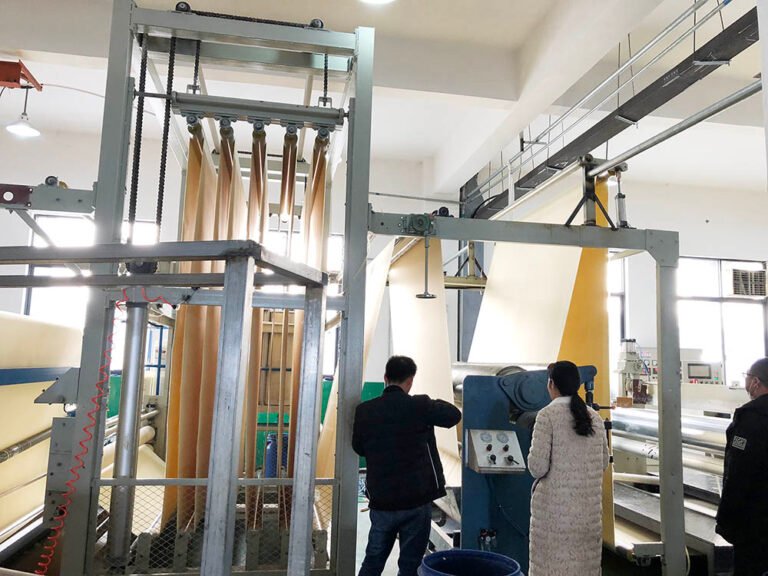
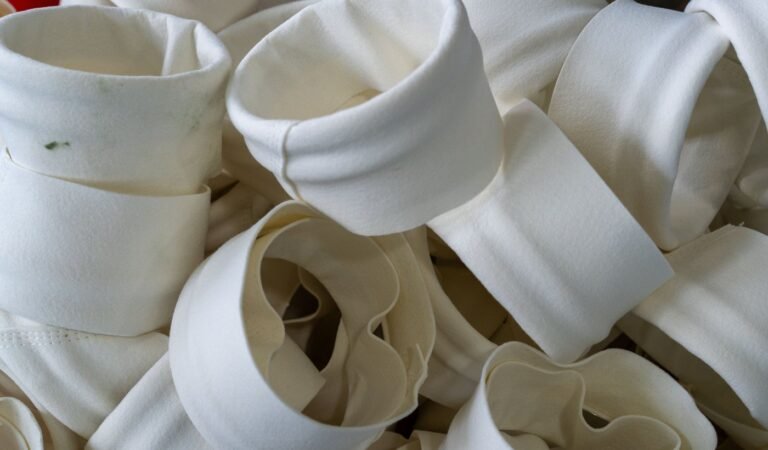
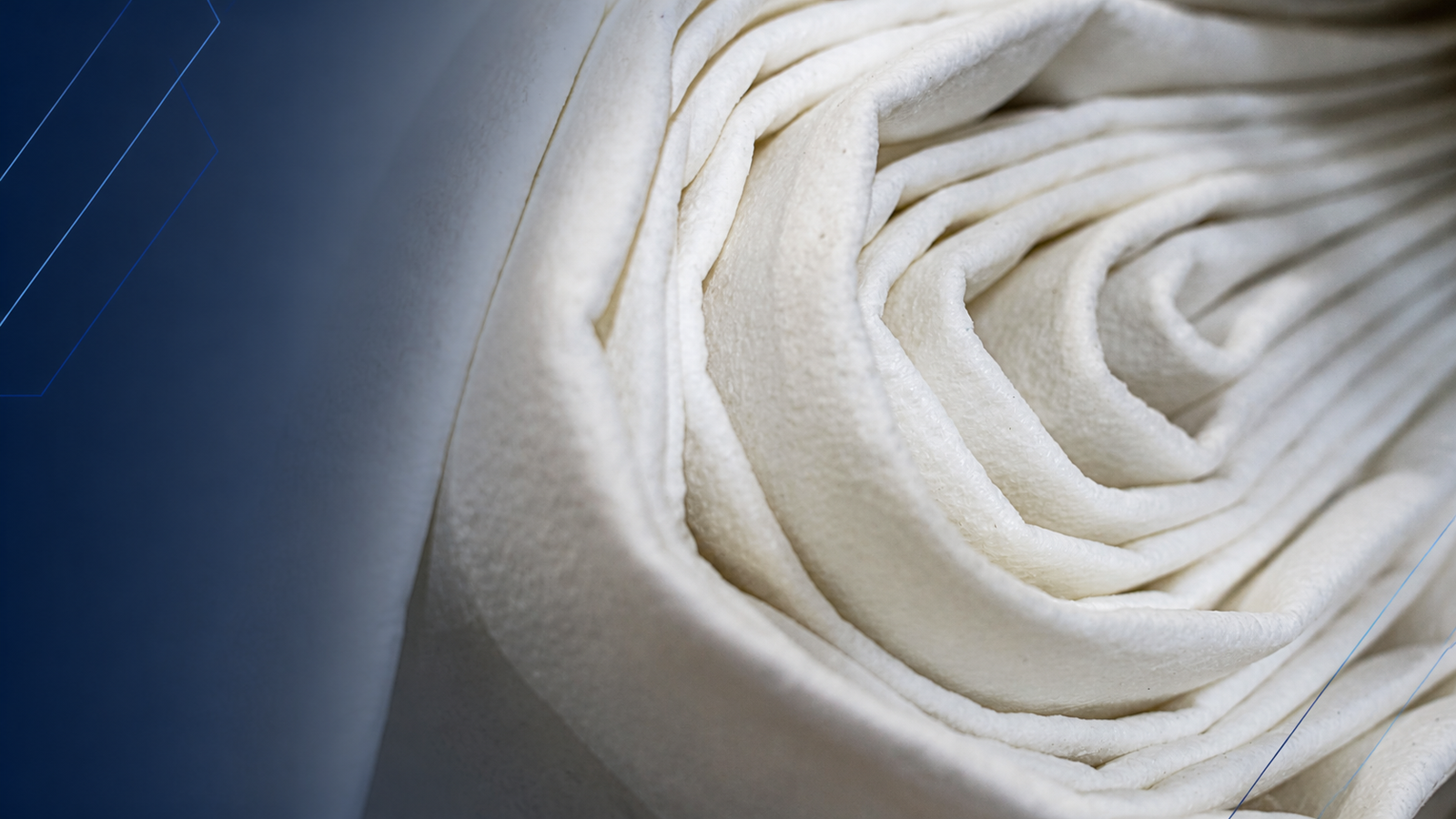
Filter media describes the working fabric made from that fiber. It may be needle felt, woven fabric, a laminated membrane surface or a composite structure. The media determines how dust builds on the surface, how easily it releases during cleaning and how much air can pass through the bag.
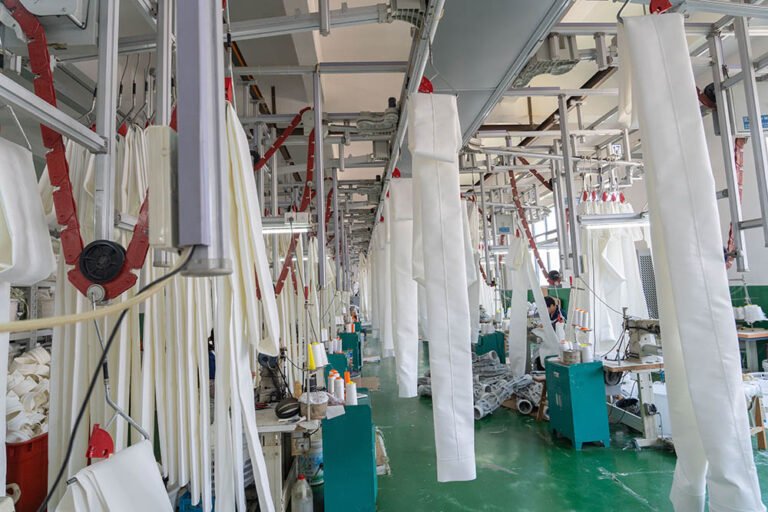
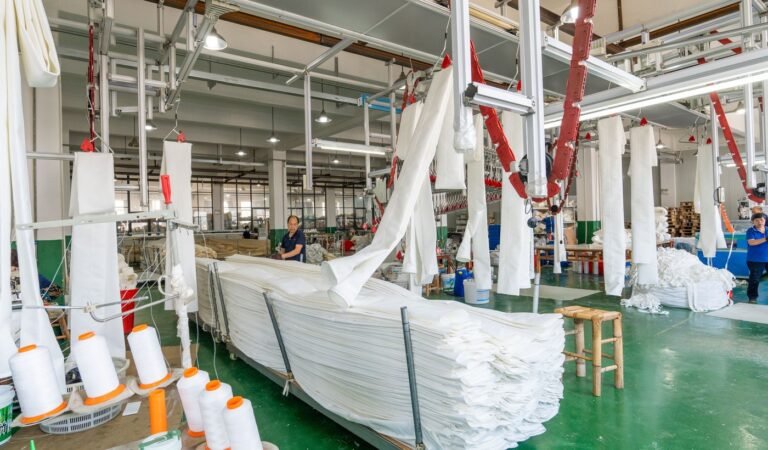
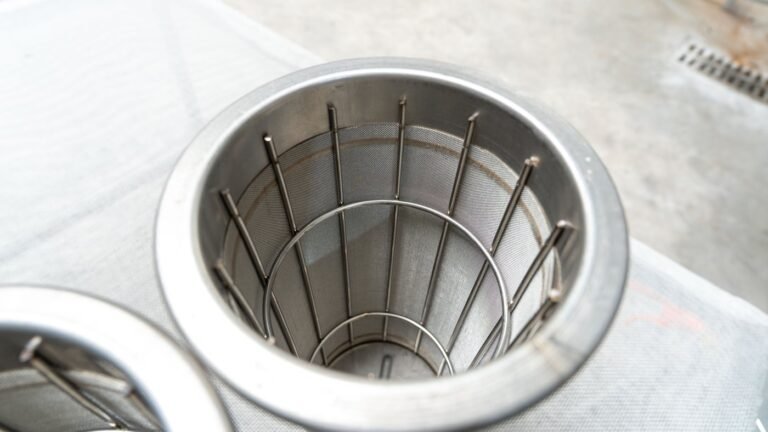
Finished bag construction includes diameter, length, top style, bottom design, seams, reinforcement and fit on the cage. Even the best dust collector filter bag media can fail early if it rubs against a rough cage or does not seal correctly at the tube sheet.
Common Types of Filter Bags for Dust Collectors
The following overview is intended to narrow the options. It is not a substitute for reviewing the actual gas and dust conditions.
| Material or media direction | Often considered when | Points to check before specifying |
|---|---|---|
| Polyester needle felt | Dry, normal-temperature industrial dust collection where cost and availability matter. | Moisture, hydrolysis risk, peak temperature and dust stickiness. |
| Polypropylene felt | Certain wet or chemical conditions where a lower-temperature material is suitable. | Temperature limit, chemical compatibility and the required finish. |
| Aramid felt | Hot, dry gas applications such as some asphalt and process-dust systems. | Peak-temperature excursions, oil mist and moisture exposure. |
| PPS felt | Moisture and acid-gas conditions where operating temperature and oxygen are controlled. | Oxygen level, temperature peaks and abnormal start-up or shutdown conditions. |
| P84 / polyimide felt | Fine dust capture and demanding high-temperature applications. | Gas chemistry, pressure-drop trend and whether a membrane is needed. |
| PTFE felt or PTFE membrane media | Severe chemical exposure, difficult dust release or strict emission requirements. | Cost, complete construction details and sealing quality. |
| Fiberglass or FMS composite media | High-temperature baghouse duty requiring dimensional stability. | Flexing, handling, cage condition, acid treatment and pulse-cleaning stress. |
| Metal-fiber media | Special high-temperature, conductive or high-strength applications. | Collector design, dust characteristics and the value of the extra investment. |
Start With the Dust and Gas, Not the Material Name
To compare dust filter bag materials fairly, begin with the continuous and peak temperatures, the presence of moisture, the gas chemistry, dust behavior and cleaning method. Fine, sticky, abrasive and fibrous dust can each need a different surface and construction approach. Pulse-jet, reverse-air and shaker collectors also place different mechanical demands on the media and cage fit.
This information turns a generic “filter bag for dust collector” request into a selection that can be reviewed technically.
Why Surface Finish and Membrane Can Change the Result
The base fiber is important, but the surface of the media often determines day-to-day performance. A membrane can keep fine particles nearer the surface, improve dust release and support lower emissions when the system is correctly designed. Treatments such as singeing, calendering, glazing, oil-and-water repellency or anti-static finishing can also be relevant, depending on the dust and application.
These options should be selected for a specific problem. Adding a membrane to solve a pressure-drop issue without checking moisture, cleaning air and air-to-cloth ratio may only hide the real cause. In the same way, anti-static treatment should be tied to the dust hazard and the overall collector design, not added as a default label.
Construction Details Protect the Media Investment
Industrial dust filter bags do more than filter dust. They must also survive installation and repeated cleaning cycles. Before finalizing an order, confirm the finished diameter and length, top style, bottom construction, reinforcement positions, cage diameter, wire condition, ring spacing, weld smoothness, sewing thread and seam direction.
When a bag has failed, photographs of the top, bottom, seam and damaged area are often more useful than a material name alone. They can show whether the real issue is abrasion, poor sealing, chemical attack, dust cake or a sizing mismatch.
A Simple RFQ Checklist for Filter Bags for Dust Collectors
- Current bag material and any finish, if known.
- Bag diameter, length, top style, bottom style and quantity.
- Continuous and peak operating temperature.
- Dust type, moisture, gas chemistry and any oil mist.
- Collector type and cleaning method.
- Pressure-drop trend, emission concern or failure pattern.
- Photos of the bag, cage and tube sheet.
The best dust collector filter bags are chosen as a matched package: suitable fiber, appropriate filter fabric, correct bag construction and a sound filter cage. If the working conditions are unclear, start with the current bag and collector data. That is usually enough to define the next questions before production.
Related Guides
- How to Choose Filter Bags by Temperature, Dust and Gas Chemistry
- PPS vs PTFE Filter Bags
- PTFE Membrane Filter Bags: When Are They Worth the Cost?
Turn material research into the right next step
Material selection is only one part of a usable bag specification. Continue according to your project stage.