Dust Collector Replacement Bags: 7 Details to Confirm Before You Order
Ordering dust collector replacement bags is not simply a matter of matching the length and diameter of the old bags. A bag that appears similar can still create sealing problems, cage abrasion, poor cleaning performance or short service life if the operating conditions and construction details are not reviewed.
Before requesting a quote for replacement dust collector filter bags, collect the information below. A clear replacement specification helps the supplier recommend suitable industrial dust collector filter bags for the system and helps prevent the same failure from appearing again.
Dust collector replacement bags: order checklist
| What to confirm | Why it matters |
|---|---|
| Bag dimensions and top/bottom style | Controls installation, sealing and movement in service. |
| Cage and tube-sheet fit | Helps prevent abrasion, leakage and premature bag damage. |
| Temperature, moisture and gas conditions | Determines whether the selected filter media is suitable. |
| Dust behavior and cleaning method | Influences dust release, surface finish and finished bag construction. |
| Current failure pattern | Shows whether the old specification should be repeated or changed. |
1. Identify the Filter Bag Style and Dimensions
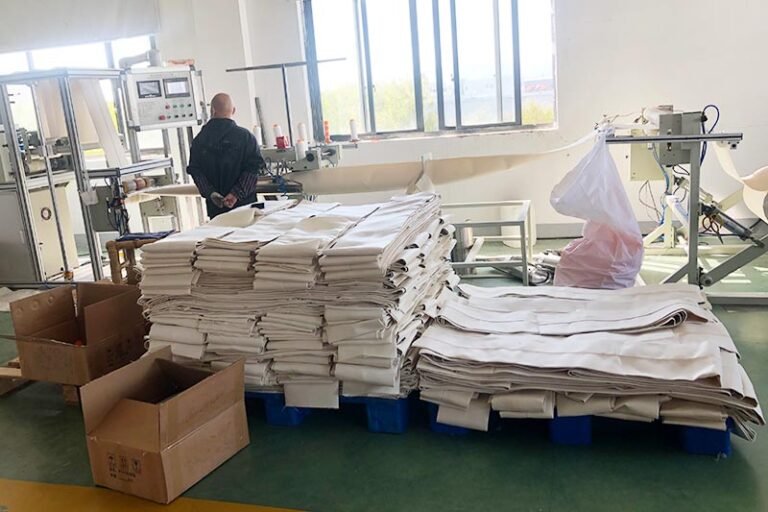
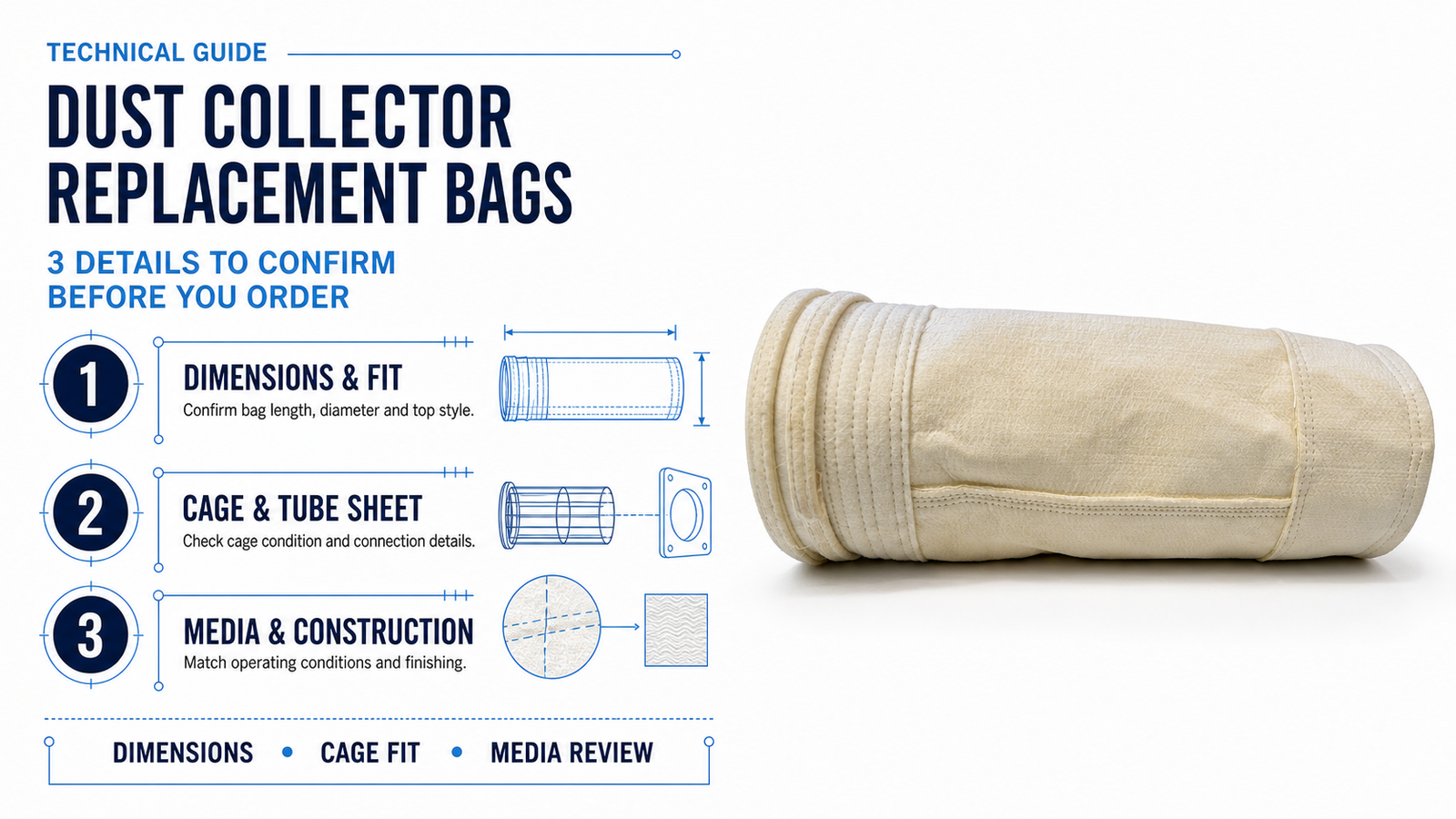
Start with one removed bag if possible. Record its overall length, body diameter or flat width, top construction and bottom construction while the bag is laid flat and not stretched.
- Overall bag length
- Body diameter or flat width
- Top construction: snap band, cuff, cord, flange or other style
- Bottom construction: disc bottom, raw edge, hemmed bottom or reinforced base
- Seam type, seam position and any labels or part numbers
For a filter bag for dust collector equipment, the top and bottom construction are as important as the fabric body. A small difference in snap-band size or cuff design can affect sealing and installation.
2. Confirm Cage and Tube-Sheet Fit
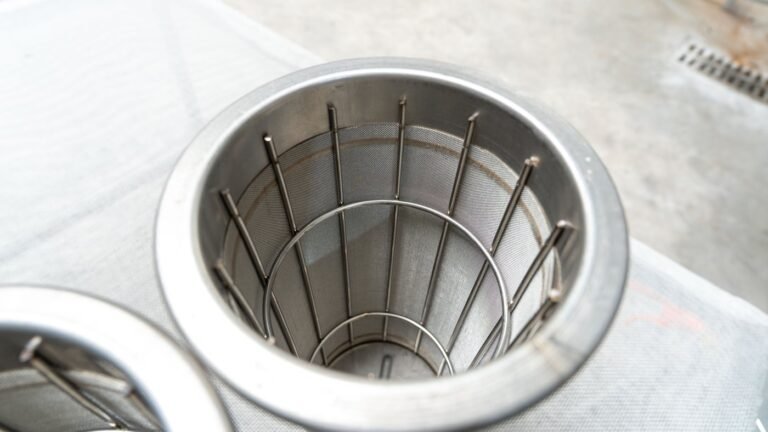
Dust collector replacement bags and their cages work as one assembly. If the cage is bent, undersized, oversized or has rough welds, even a correctly made bag may fail early.
Check cage diameter and length, top-cap and venturi style, wire and ring spacing, corrosion, broken wires and rough welds. Also confirm the tube-sheet hole size and connection style used by the dust collector bag filter system.
3. Record the Real Operating Conditions
The right filter media depends on the actual process, not only the industry name. Include normal and peak temperature, moisture or condensation risk, gas chemistry, dust type, abrasiveness, stickiness, oil content, cleaning method and current pressure-drop behavior.
This information helps determine whether the existing media should be repeated or whether the industrial dust collector filter bag replacement should use a different material, finish or construction.
4. Do Not Reorder the Same Failure Pattern
If the old bags failed early, the replacement order is an opportunity to identify why. Wear marks in one area may point to cage abrasion or poor alignment. A hardened dust layer may indicate moisture, sticky dust or weak cleaning. Brittle fabric can suggest excess heat or chemical exposure.
Photos of the removed bags are especially useful when they show the damaged area, full bag construction, cage and tube-sheet connection. They give more context than a material name alone.
5. Match the Media and Surface Finish to the Application
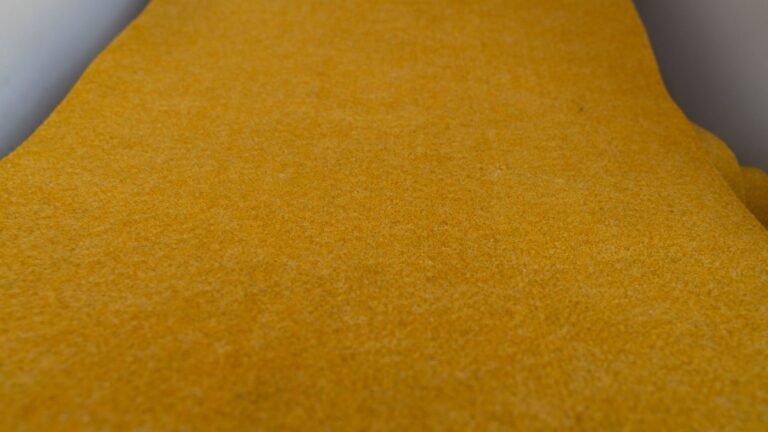
Filter media selection should be based on performance requirements rather than price alone. Depending on the application, the review may include polyester, aramid, PPS, PTFE, P84, fiberglass or other media options. The surface finish can also change dust release, abrasion resistance and suitability for specific operating conditions.
When comparing dust collector filter bags suppliers, ask how the proposed media and finish address the current operating problem. The lowest-cost bag is not always the lowest-cost replacement if it creates another early shutdown.
6. Specify Construction Details Before Production
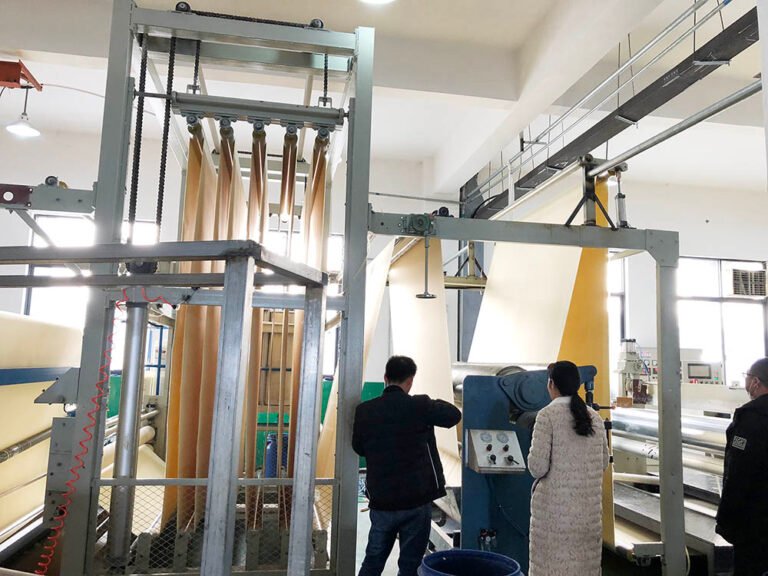
Custom dust collector bags often require more than a standard material selection. Confirm the snap band or cuff dimensions, top style, gasket arrangement, bottom style, reinforcement, sewing thread, seam protection and any required membrane, anti-static treatment or identification label.
For large replacement projects, request a sample or drawing review before full production. This is particularly useful when the original bag is unavailable or the dust collector has been modified over time.
7. Send One Complete Replacement Package
A complete enquiry reduces back-and-forth and makes quotation faster. Send photos of the old bag, top, bottom and damaged areas; bag and filter cage dimensions; a nameplate photo if available; temperature and gas conditions; dust description; failure pattern; quantity and delivery destination.
When Should You Order Custom Dust Collector Bags?
Custom replacement dust collector bags are worth considering when the system has non-standard dimensions, unusual gas conditions, repeated bag failures or a special top and bottom design. They can also be appropriate when a standard bag has never provided acceptable service life.
Once the construction and quantity are confirmed, use the filter bag replacement cost guide to compare the complete scope of quotations, including cage work, installation and shutdown assumptions.
Related Guides
- How to Measure Replacement Dust Collector Bags
- Filter Bag Cages: The Small Part That Can Ruin a New Set of Bags
- Dust Collector Filter Bag Materials and Media: A Practical Guide
Next step
Prepare a replacement bag RFQ
If you have an old bag, drawing, sample or measured dimensions, use the replacement route to confirm construction before quotation.