Dust Collector Bag Filter System: What to Check Before Replacing Filter Bags
A dust collector bag filter system is often judged by one visible result: whether it captures dust. But when pressure drop rises, emissions increase or filter bags fail early, replacing the bags alone may not solve the real problem.
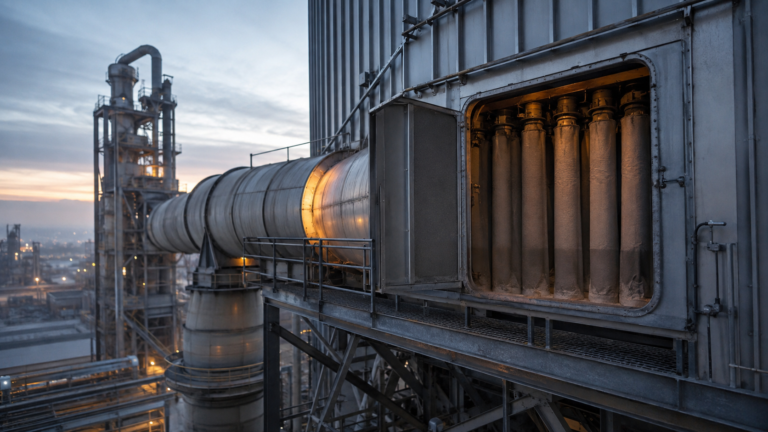
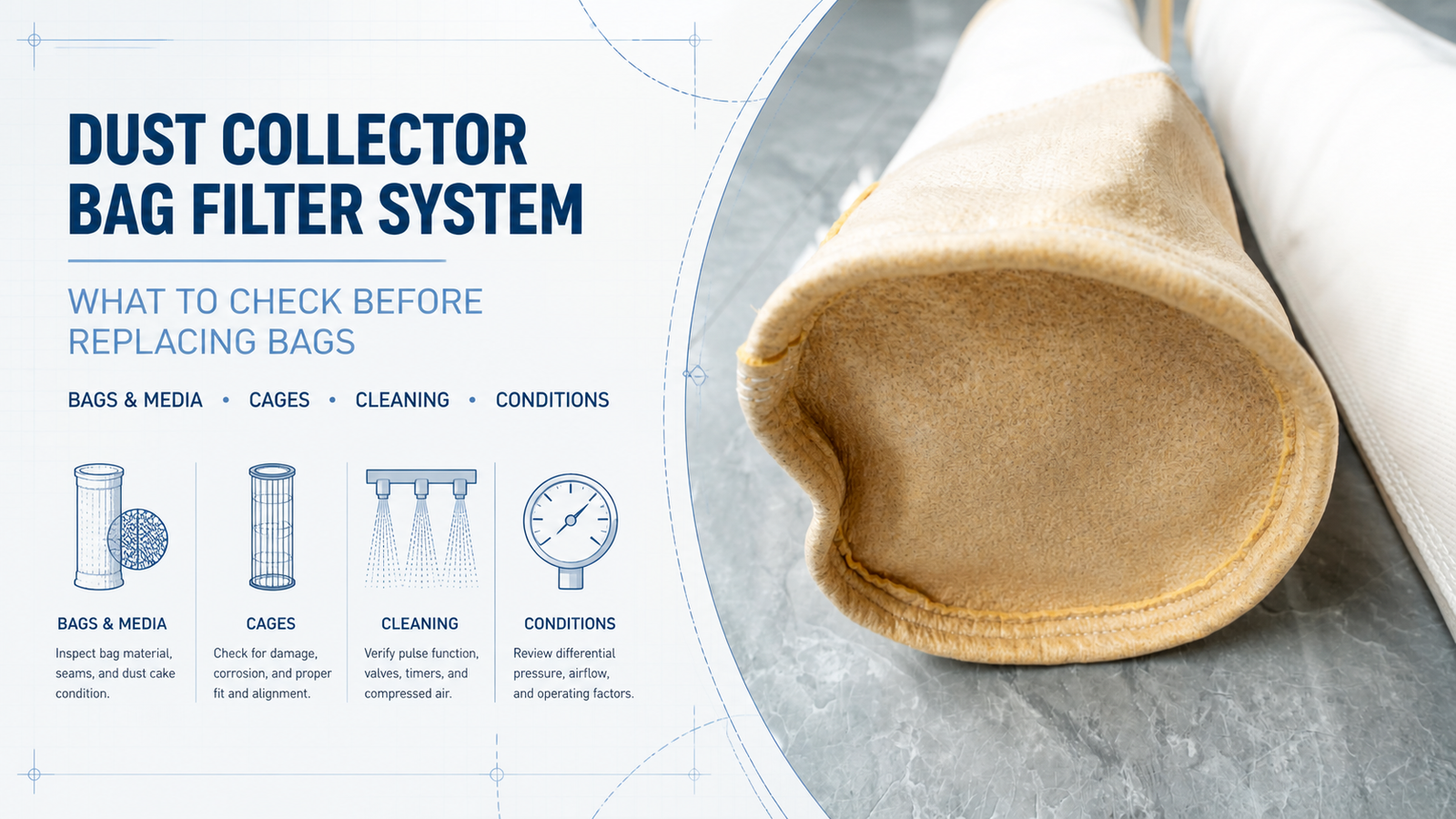
A baghouse works as a connected system. Filter media, cage condition, cleaning energy, airflow, dust behaviour and gas conditions all affect one another. Reviewing those details before ordering replacement bags can help avoid a repeat failure and support longer service life.
Dust collector bag filter system: start with the symptom
Before selecting a new bag, define what has changed in the dust collector bag filter system. Common symptoms include higher differential pressure, reduced airflow, visible dust at the outlet, frequent bag damage, hard dust cake or bags that no longer release dust during cleaning.
Each symptom points to a different possible cause. A high pressure drop may be related to fine sticky dust, moisture, weak cleaning pulses, excessive air-to-cloth ratio or a media surface that is no longer suitable. It does not automatically mean the fiber material is wrong.
Inspect the Existing Filter Bags
Used bags provide useful evidence. Before removing them, record the bag position and take photos of the top, body, bottom, seam and damaged areas. Compare more than one bag if possible, because a localized failure may be connected to a single cage or tube-sheet hole rather than the entire system.
| What you see | What to investigate |
|---|---|
| Holes or polished wear marks | Damaged cage wires, rough welds, bag movement or a sizing mismatch. |
| Broken seams or top damage | Construction details, installation method, tension and sealing at the tube sheet. |
| Hard dust cake | Moisture, condensation, sticky dust or insufficient cleaning. |
| Blinding and poor dust release | Fine particles, unsuitable finish, membrane requirement or weak cleaning energy. |
| Brittle or discoloured fabric | Temperature excursions, chemical exposure or oxidation. |
Confirm Operating Conditions
Collect the continuous and peak temperature, moisture condition, gas chemistry and dust description before specifying a replacement. A material that works in dry, stable-temperature service can fail early if condensation, acid gas, oxygen or short temperature peaks are introduced.
- What is the normal and peak gas temperature?
- Can condensation occur during start-up, shutdown or low-load operation?
- Is the gas stream acidic, alkaline, oxidizing or affected by oil mist?
- Is the dust fine, abrasive, fibrous or sticky?
Check Cages and the Tube Sheet
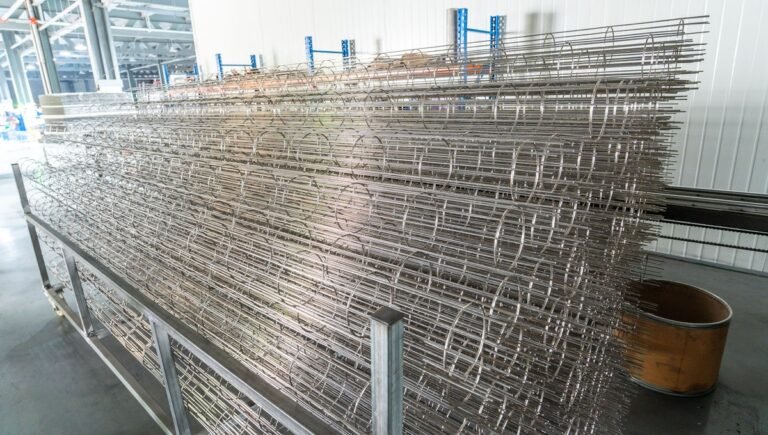
A sound replacement bag can still fail early if it is installed over a damaged cage. Check cage diameter, length, wire condition, ring spacing, weld smoothness and venturi fit. Bent wires, corrosion and burrs can quickly create abrasion marks. Also inspect tube-sheet holes for distortion or wear that could prevent the snap band from sealing correctly.
For more detail, see our guide to filter bag cage inspection before a new bag installation.
Review the Cleaning System
Pulse-jet, reverse-air and shaker collectors place different mechanical demands on filter bags. In a pulse-jet collector, verify compressed-air pressure, valve performance, blowpipe alignment, pulse timing and venturi condition. Too little cleaning energy can leave a heavy dust cake; too much can accelerate mechanical fatigue.
The best replacement bag is not only one that filters efficiently. It must also tolerate the cleaning cycle and operating conditions of that particular dust collector bag filter system.
Prepare a Useful Replacement-Bag Request
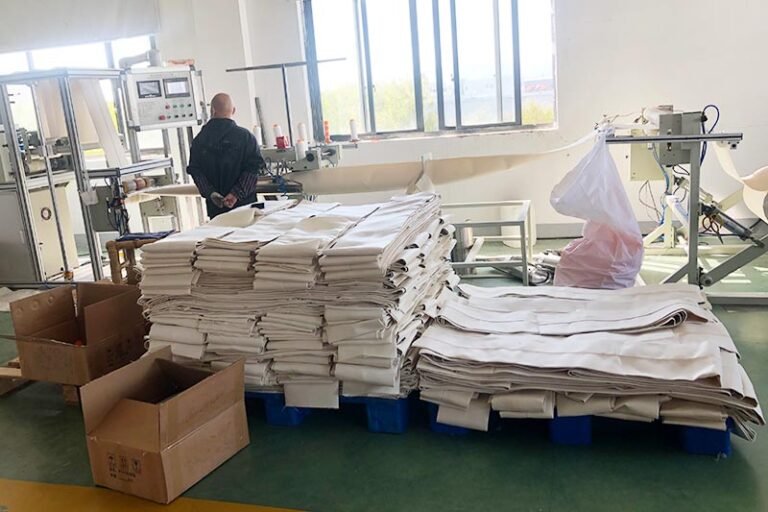
A clear request reduces the chance of a mismatch and allows a more useful technical review. Include bag diameter and finished length, top and bottom construction, current material if known, collector type, cleaning method, temperature, dust and gas conditions, plus photos of used bags, cages and tube-sheet holes.
Where the previous failure is unclear, a removed bag can reveal important clues. Our used filter bag inspection guide explains what to photograph and why it matters.
Final Thought
Replacing bags without reviewing the reason for the previous failure can lead to repeat downtime and unnecessary cost. Treat industrial dust filter bags, suitable filter fabrics, filter cages, cleaning equipment and operating conditions as one connected system before the replacement order is finalized.
Send bag dimensions, collector type, operating temperature, dust and gas conditions, plus photos of the used bags and cages. We can help review fit, media direction and construction details before production.
Request a Fit and Conditions Review
Use what you found in the system check
After checking the collector, choose the path that best matches the evidence available for your replacement project.