Dust Collector Filter Bag Cleaning: When Cleaning Helps and When to Replace
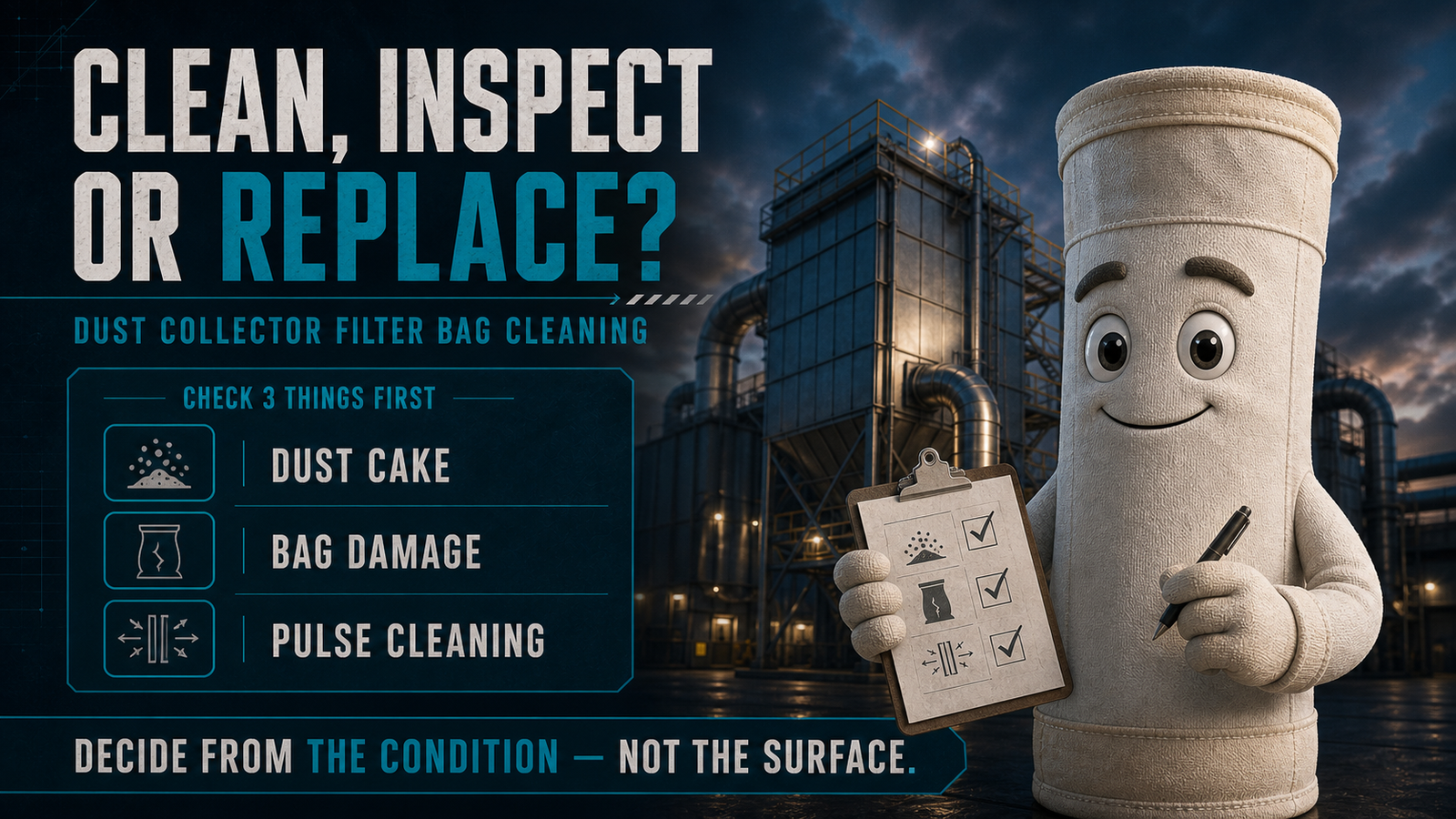
When differential pressure rises, it is tempting to ask whether the bags can simply be cleaned. In practice, dust collector filter bag cleaning can be useful in some situations, but it is not a universal cure. The right decision depends on what is actually restricting airflow and whether the media is still structurally sound.
A bag that carries a normal, releasable dust cake may recover when the collector cleaning system is corrected. A bag that is chemically damaged, permanently blinded, brittle or badly abraded should not be put back into service just because it looks clean on the surface.
Dust collector filter bag cleaning: identify the restriction first
High pressure drop does not always mean the filter bags are dirty. Check the pressure trend, process changes and cleaning system before removing bags. Fine sticky dust, condensation, weak pulse cleaning, incorrect pulse timing and excessive airflow can all cause a dust cake to remain on the media.
Before arranging any dust collector filter bag cleaning, record the operating temperature, moisture condition, dust type, gas chemistry, collector type and cleaning method. This information helps separate a correctable operating issue from a bag that has reached the end of its service life.
When Cleaning May Help
Cleaning can be considered when the bag fabric remains flexible and intact, the dust layer is dry and releasable, and the failure pattern does not suggest chemical attack or severe abrasion. It may also help after a temporary process upset if the collector and pulse-cleaning system have been inspected first.
| Situation | What to check first | Likely direction |
|---|---|---|
| Dry dust cake with no visible damage | Pulse pressure, valve performance, timer settings and compressed-air supply | Correct cleaning performance; inspect before deciding on off-line cleaning. |
| Fine dust remains on the surface | Media finish, membrane requirement, dust particle size and air-to-cloth ratio | Review media and operating conditions, not only the cleaning method. |
| Short-term high pressure after an upset | Temperature, moisture and process changes | Stabilize the process, then inspect representative bags. |
When Replacement Is the Safer Choice
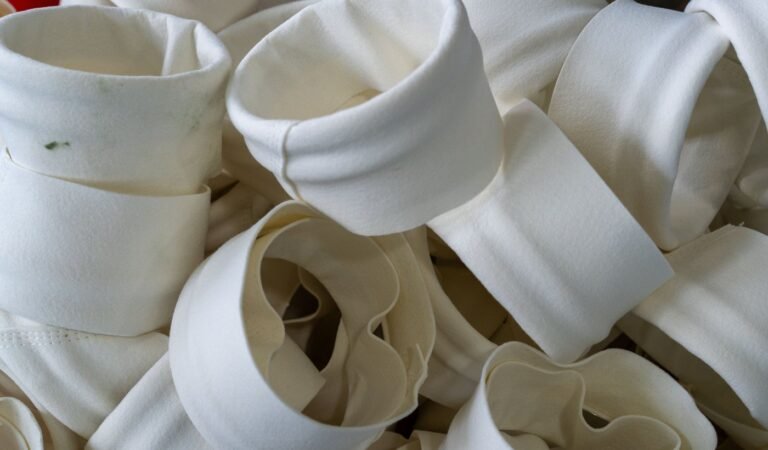
Do not rely on cleaning to repair damaged media. Replacement is usually the safer direction when bags show holes, broken seams, brittle fabric, deep abrasion, melted areas, damaged snap bands or permanent hard blinding. These conditions can lead to dust leakage, repeat downtime and a short remaining service life.
- Abrasion: inspect cages for bent wires, burrs, rough welds and incorrect diameter.
- Hard or sticky dust cake: investigate moisture, condensation and dust chemistry before ordering new bags.
- Chemical or heat damage: review normal and peak temperature plus gas composition.
- Seam or top failure: confirm dimensions, construction and tube-sheet fit.
Inspect the Collector Before Reinstalling Any Bag
Whether bags are cleaned or replaced, the collector should be checked before installation. Review cages, venturis, tube-sheet holes, pulse pipes, valves and compressed-air quality. A rough cage or leaking tube-sheet connection can damage a new or cleaned bag quickly.
Where replacement is necessary, review industrial dust filter bags, the suitable filter fabrics and correctly sized filter cages together. The bag, media and cage should be matched as one filtration assembly.
For related troubleshooting, see what to check when dust collector pressure drop is too high and our guide to filter bag blinding and hard dust cake.
What to Photograph and Record
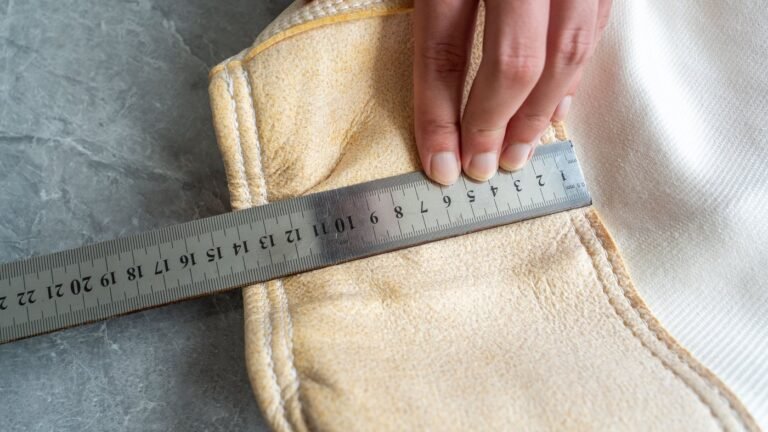
If a decision is needed remotely, photos can provide valuable evidence. Photograph the top, body, bottom, seam and damaged area of the bag, then include cage photos and a tube-sheet close-up. Record the bag dimensions, material if known, pressure-drop trend, temperature and cleaning method.
This record makes it easier to decide whether dust collector filter bag cleaning is reasonable or whether a new bag specification is needed. It also reduces the chance of repeating the same failure after replacement.
Final Thought
Cleaning is worthwhile only when the filter media and bag construction are still sound and the root cause has been addressed. If the issue is damage, chemical exposure, improper fit or persistent blinding, replacement and a system review are usually more reliable.
Send photos of the removed bag, cage and tube sheet together with temperature, dust and gas details. We can help identify whether cleaning is reasonable and what to check before a replacement order.
Next step
Prepare a replacement bag RFQ
If you have an old bag, drawing, sample or measured dimensions, use the replacement route to confirm construction before quotation.