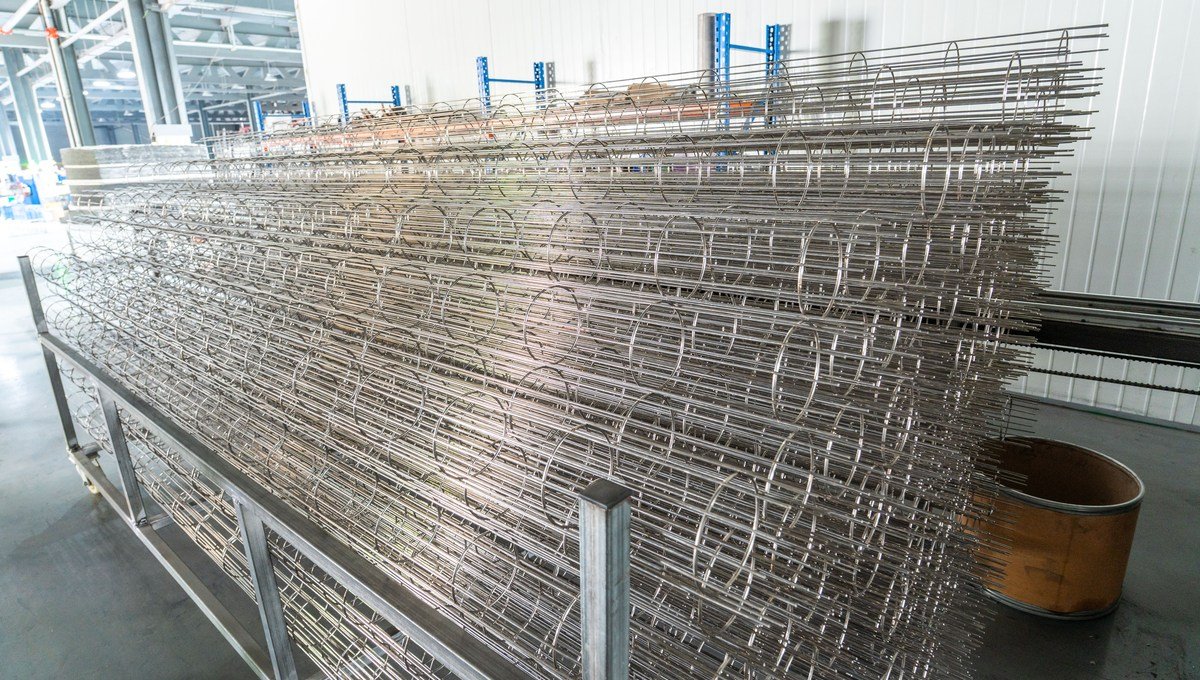
Filter Cage Material and Coating: Galvanized, Silicone or Stainless Steel?
Filter cage material and coating affect the support surface inside each filter bag. Damp starts, condensation and wear can leave a cage with rough welds, damaged coating or corrosion along the wires. Inspect that surface and the operating conditions before choosing a replacement cage.
When ordering replacement cages, choose the material and finish from the actual gas conditions and failure history, not from the filter bag material alone. A PTFE or PPS bag does not automatically require a stainless steel cage. Equally, a coated carbon steel cage is not automatically safe in a corrosive baghouse.
The first decision is whether corrosion is occasional and controllable, or a recurring part of normal operation. The second is whether the proposed cage will still fit the bag, tube sheet and cleaning system.
Filter cage material and coating: a practical comparison
| Cage option | A sensible starting point when | Check carefully when |
|---|---|---|
| Carbon steel | The gas is dry and noncorrosive, and the existing cages have a satisfactory service record | Shutdown condensation, outdoor storage or visible rust has occurred |
| Galvanized carbon steel | Moderate corrosion protection is needed in a relatively dry service | Frequent acid condensation, coating damage, or a temperature above the specific galvanizing process and supplier’s rated service limit |
| Silicone-coated carbon steel | A suitable coating system can be specified for the operating temperature and gas exposure | The coating has chipped at welds, joints or handling points; compatibility and application quality are unknown |
| 304 stainless steel | The gas is moist and a more corrosion-resistant cage is justified | Chloride-bearing condensate or an aggressive chemical environment is present |
| 316L stainless steel | Corrosion risk, especially from chloride-containing condensate, warrants a higher alloy grade | The exact condensate chemistry, temperature or exposure may still exceed what 316L can tolerate |
This table is a screening aid, not a service-life guarantee. Coating formulation, coating thickness, fabrication quality and gas chemistry all matter. Ask for the supplier’s material and coating specification for the proposed cage.
Start with the old cage, not the catalogue
Remove a sample of cages from the positions with the shortest bag life. Photograph the top, middle, bottom and any joint in a split cage. Look for these patterns:
- Rust near the top or tube sheet: Check air leakage, condensation during startup or shutdown, and whether wet dust is collecting around the bag mouth.
- Localized corrosion or coating loss at welds: Review weld finishing and coating coverage, not just the nominal coating name.
- Long vertical rub marks on the bag: Check protruding wires, cage straightness and the finished cage diameter.
- Repeated wear at support rings: Check ring spacing, weld smoothness and whether the bag is moving excessively during pulse cleaning.
- Damage concentrated near a split-cage joint: Inspect the connection and its installed alignment before ordering the same design again.
If cages from different rows show different damage, do not assume the whole collector has one uniform environment. Inlet distribution, water ingress and temperature variation can create local problems.
When does galvanized steel make sense?
Galvanizing adds a zinc layer to carbon steel. It can be a practical specification where the baghouse is usually dry and the previous uncoated cages rusted in storage or during occasional damp periods.
The limitation is exposure. If acid condensation repeatedly wets the cage, the protective layer can be consumed or damaged. A galvanized cage is also only as good as its finished surface: rough welds, handling damage and mismatched dimensions can still destroy a new filter bag.
Before choosing galvanizing, confirm the actual operating and excursion temperatures with the cage supplier. Do not assume every galvanizing method has the same temperature or chemical limit.
When should you consider a silicone-coated cage?
Silicone-coated cages are often proposed for hotter baghouses or where a specified coating offers useful surface protection. The word “silicone” is not a complete specification. Ask what coating system is used, how it is applied after fabrication, what temperatures and chemicals it is rated for, and how coverage at welds and joints is checked.
A coating can fail first at the places that matter most to bag life: the top connection, ring welds and split-cage joint. Request a finished-cage photo or sample and inspect those areas. If the old coating peeled or chipped, identify why before repeating it. Handling damage, inadequate surface preparation and incompatible service conditions call for different corrections.
304 or 316L stainless steel: which one?
Stainless steel removes the dependence on a separate protective coating, but the grade must still match the environment. 304 can be a useful step up where moisture and general corrosion are the concern. Where chloride-bearing condensate is present, 316L may be more appropriate. Neither grade is universally corrosion-proof.
Ask the plant for gas and condensate information where available: moisture, acid species, chlorides, normal temperature, low-temperature periods and cleaning or washdown practices. If the chemistry is unknown and cages fail rapidly, a material upgrade alone is a guess. A failure sample or condensate analysis can make the next purchase more defensible.
The higher initial cost of stainless steel should be compared with cage replacement labor, bag damage, shutdown time and the expected service interval. An inexpensive cage is costly if it shortens the life of a full bag set.
Material is only half of the replacement specification
Even the right alloy or coating will not correct a poor fit. Before releasing a cage order, confirm:
- Finished cage outside diameter and overall length: Measure the cage and the bag it will support. Do not rely only on the original drawing if the collector has been modified.
- Top and bottom construction: Confirm flange, collar, venturi, bottom cap and tube-sheet fit from photos or a sample.
- Wire diameter, vertical wire count and ring spacing: These influence rigidity, bag support and the contact pattern on the fabric.
- Weld and surface finish: Ask how burrs, sharp projections and coating defects are inspected.
- Straightness and split-joint alignment: Check long cages in their assembled condition, including transport and installation constraints.
- Bag compatibility: Review the finished cage alongside the proposed filter bag, especially after changing bag material, thickness or top construction.
For a replacement project, send both a used bag photo and measurements and a removed cage. The pair tells more than either component on its own.
A practical RFQ example
“We need 800 replacement cages for a pulse-jet baghouse. The bags are 160 mm × 6,000 mm, with a snap-band top. The gas normally runs at 150°C, but the unit cools below 80°C during shutdown. Existing galvanized cages show rust and rough welds near the top after 18 months. Please review galvanized, silicone-coated and 304/316L options. We can provide a cage drawing, old cage photos, gas composition and condensate data.”
That request gives a supplier a real decision to make. By contrast, “quote stainless cages, 160 × 6,000 mm” leaves the chemistry, fit and failure mode unresolved.
Before you order
Select the cage by combining three pieces of evidence: the operating environment, the old cage’s damage pattern and the exact baghouse dimensions. Use the material comparison to narrow the options, then verify the finish, weld quality and fit on a sample or approved drawing.
Pinnacle Filter supplies filter cages matched to industrial filter bags. If you are replacing bags and cages together, send the existing cage drawing or photos, bag dimensions, operating temperature, gas and moisture conditions, quantity, and the location of any corrosion or bag wear. Request a cage and bag review.
Frequently asked questions
Should every new set of filter bags get new cages?
No. Inspect the old cages first. Replace or repair cages that are bent, corroded, rough, incorrectly sized or unable to support the new bags as specified.
Is 316L always better than a coated cage?
Not automatically. The answer depends on the chemistry, temperature, coating specification, expected service interval and cost of another shutdown. In severe conditions, even 316L may need a more specific materials review.
Can a cage coating fix early bag wear?
Only if surface corrosion or roughness is the cause and the coating is suitable for the duty. Incorrect diameter, ring spacing, alignment or pulse settings must be addressed separately.