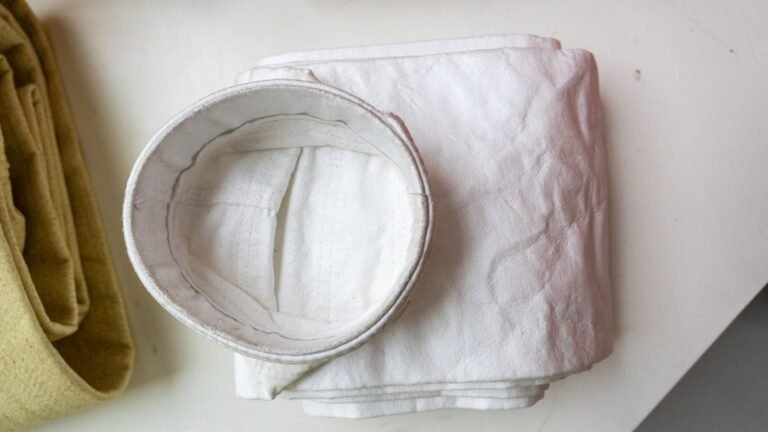
How Does a Baghouse Work? A Practical Guide for Filter Bag Buyers
How does a baghouse work? Dust-laden gas passes through filter media while collected dust is removed by the cleaning system and discharged from the hopper. For replacement-bag buyers, understanding the gas path, dust cake and cleaning cycle helps explain why the same media can perform differently in two collectors.
A baghouse looks simple from the outside. Dirty gas enters, clean air leaves, and dust drops into the hopper. In real operation, the details inside the collector decide whether the bags run smoothly or plug early.
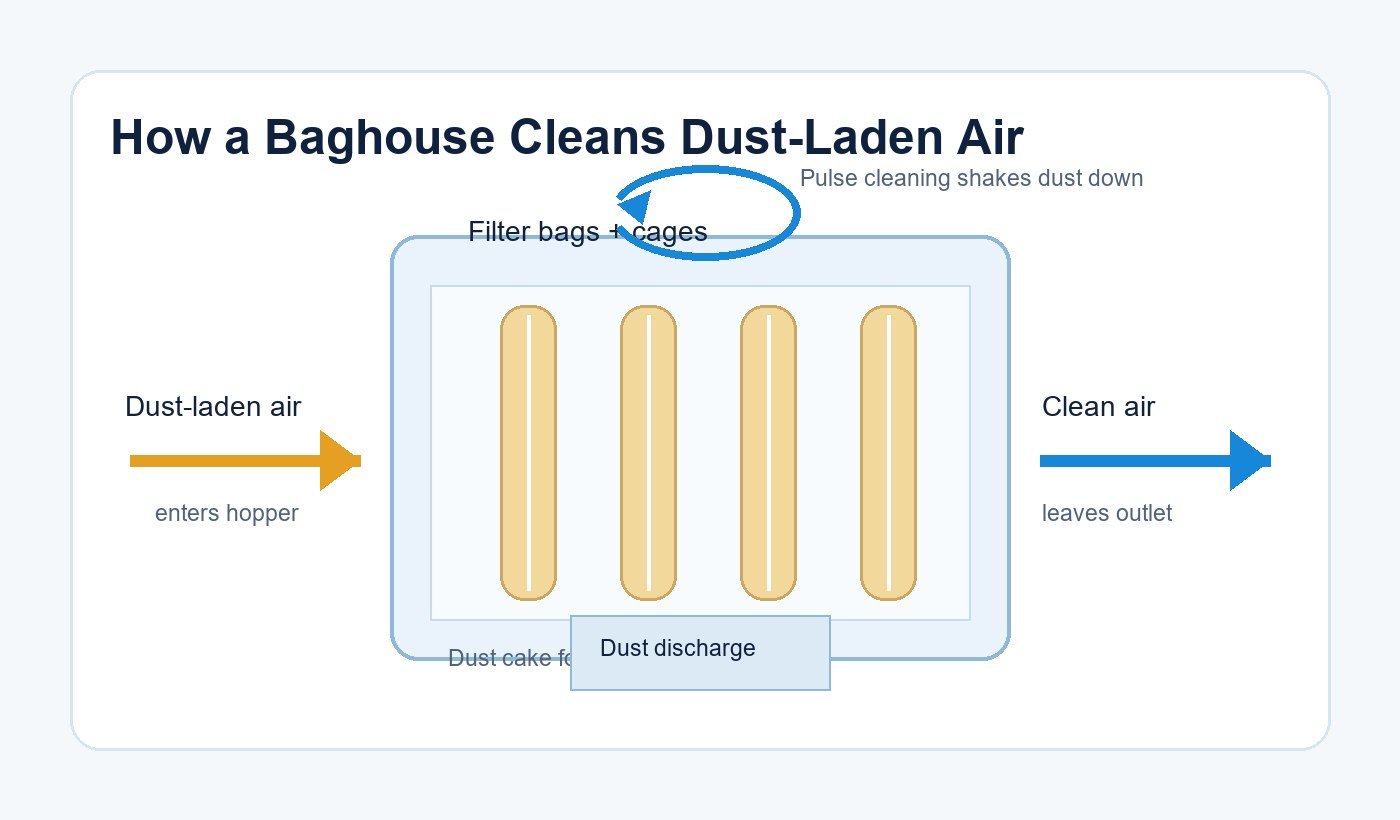
How does a baghouse work as a complete system?
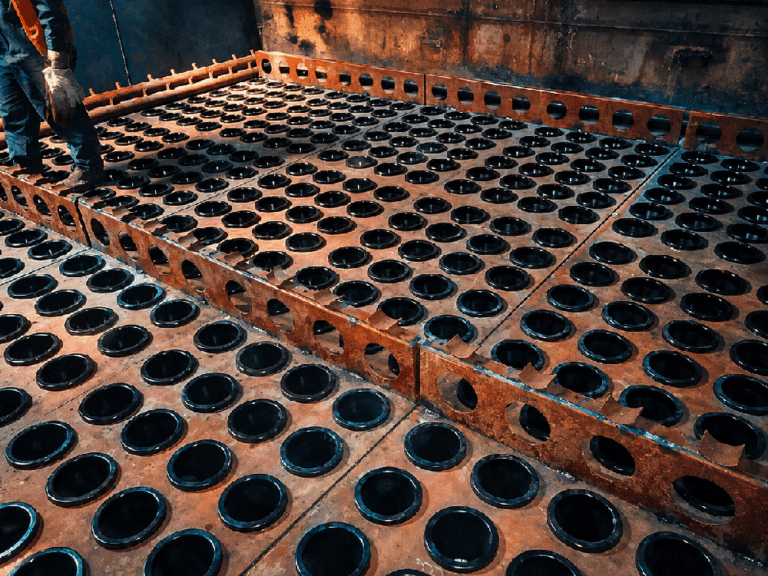
Inside the collector, each filter bag is supported by a cage. Dust-laden air passes through the filter media. Fine dust is captured on the outer surface, and a dust cake starts to form. A thin, stable cake can improve filtration. A thick or sticky cake raises pressure drop and becomes hard to clean.
This is why two plants can buy the same material and get different results. Temperature, moisture, dust particle size, cleaning pressure, air-to-cloth ratio and cage condition all change the result.
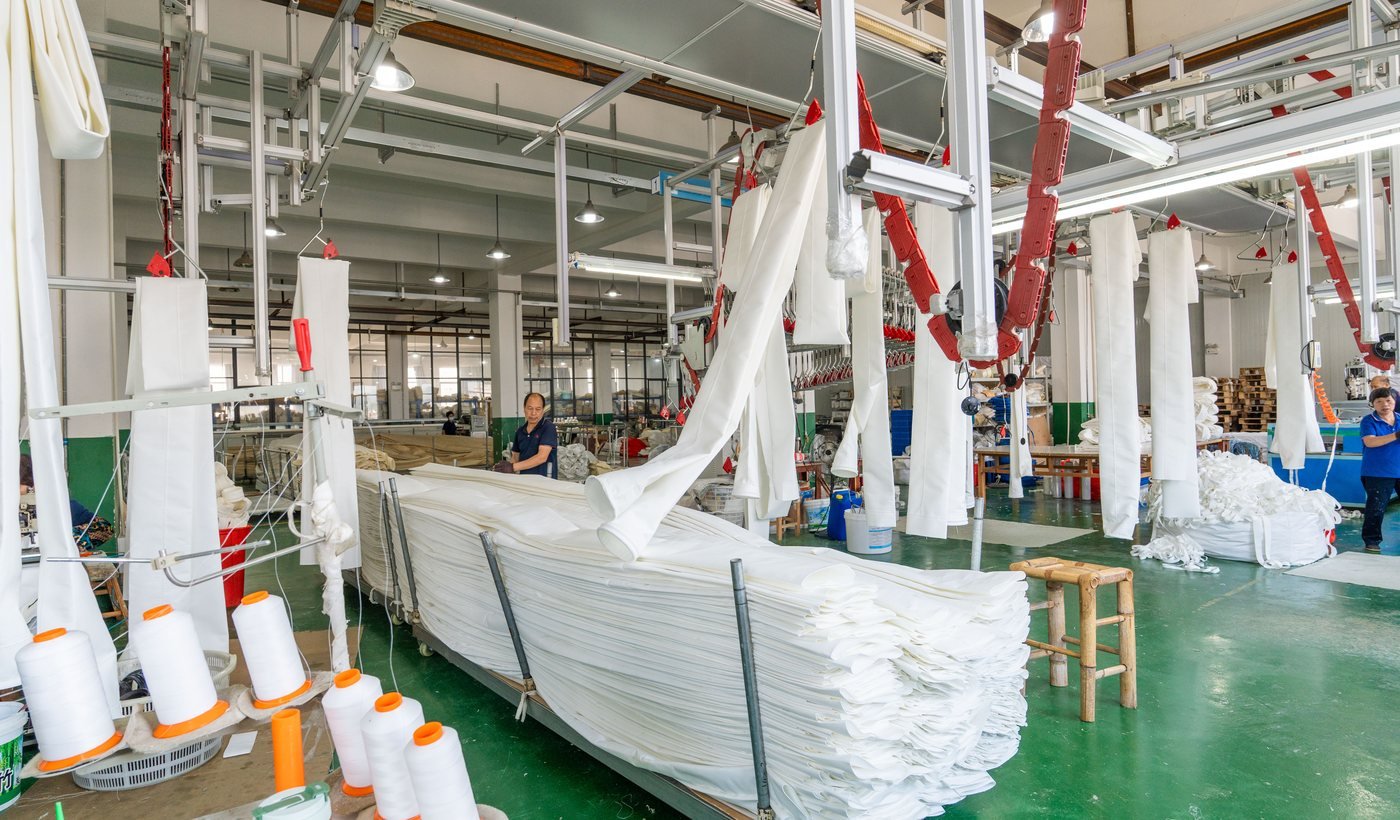
Pulse-Jet Cleaning In Plain Language
Most modern industrial filter bags are used in pulse-jet collectors. A short burst of compressed air expands the bag and helps release dust from the surface. If the pulse pressure is weak, the blow pipe is misaligned, or the dust has become damp and sticky, the bag may not clean well even if the material is correct.
| Collector detail | Why buyers should care |
|---|---|
| Bag diameter and length | Wrong size changes fit, cleaning behavior and sealing. |
| Dust cake release | Hard cake causes high pressure drop and short service life. |
| Filter cage condition | Rough welds or bent cages can cut new bags quickly. |
| Moisture and dew point | Dry dust may release well, but damp dust can blind the media. |
What To Confirm Before Choosing A Bag
Start with the working condition, then choose the filter media. Polyester, acrylic, PPS, aramid, P84, PTFE, fiberglass, FMS and metal fiber products all have a place, but none of them should be selected from a name alone.
- Temperature range, including peaks.
- Dust type: fine, abrasive, sticky, oily or moisture-prone.
- Gas chemistry: acid, alkali, oxygen, solvent or corrosion risk.
- Cleaning method and compressed air condition.
- Bag damage pattern and cage condition.
Next step
Check the baghouse before changing bags
Cage fit, cleaning method, tube-sheet condition or repeated damage may affect the replacement result. Review the baghouse system first.