Filter Bag Blinding and Hard Dust Cake: Why It Happens and How to Reduce It
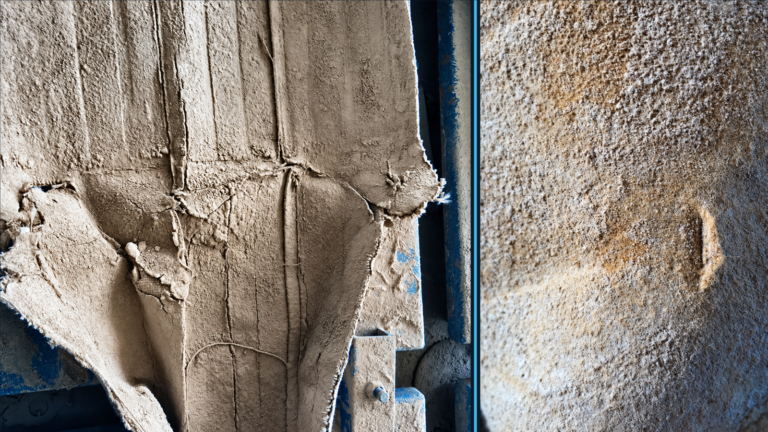
Filter bag blinding can appear as rising pressure drop, weak suction or increasingly frequent cleaning. A hard surface cake and deposits within the media require different checks. Record the dust condition, moisture history and cleaning response before deciding whether the bags can be recovered or need replacement.
This is not always because the bag is poor quality. Blinding is often a combination of dust behavior, moisture, temperature, cleaning energy and media surface.
What filter bag blinding looks like in service
A blinded bag may feel heavy, stiff or unusually smooth with a hard dust layer. Sometimes the dust cake looks dry on the outside but has moisture or oil inside. Sometimes the surface is clean in some rows but heavily loaded in others, which points to uneven cleaning or airflow.
Common Causes
| Cause | What it usually means |
|---|---|
| Moisture or condensation | Dust becomes sticky and builds a hard cake. |
| Fine powder | Particles enter the media depth and block pores. |
| Oil mist or tar-like dust | Surface dust becomes adhesive and difficult to pulse clean. |
| Weak pulse cleaning | Dust cake remains even when the media is suitable. |
| Wrong finish | The surface does not release the dust well enough for the process. |
Can PTFE Membrane Help?
PTFE membrane filter media can help when the main problem is fine dust penetration or poor dust release from the surface. It keeps more dust on the surface instead of inside the felt. But membrane is not a cure for every blinded bag.
If the collector is running below dew point, the dust discharge is blocked, or the pulse cleaning system is weak, the membrane can still become loaded.
How To Reduce Blinding Risk
- Keep the gas temperature above dew point where the process allows.
- Review dust moisture, oil mist and stickiness before choosing media.
- Check pulse pressure, valve condition and cleaning interval.
- Consider PTFE membrane or surface treatment when fine dust or release is the main issue.
- Inspect the failed bag surface before cleaning it for photos.
When the inspection confirms replacement, specify the dust condition as well as the bag size so that suitable industrial dust filter bags can be selected for the next run.
Next step
Check the baghouse before changing bags
Cage fit, cleaning method, tube-sheet condition or repeated damage may affect the replacement result. Review the baghouse system first.