Cement industry filtration
Cement Plant Filter Bags Built Around the Actual Baghouse Condition
From kiln tail and clinker cooler dust to coal mills and cement mills, the right filter bag depends on temperature events, gas chemistry, dust behavior, cleaning method, cage fit and the failure pattern already visible in the collector.
Cement baghouse projects
Cement Plant Filter Bags for Different Filtration Duties
“Cement plant filter bag” is a useful starting search, but it is not a final specification. A high-temperature kiln-tail collector, an abrasive clinker cooler and a moisture-sensitive coal mill can require different media, finishes and bag construction.
Pinnacle uses the position in the process and the real operating condition to narrow the material direction before a quotation is made. The final choice should be confirmed against the plant’s actual duty rather than the industry name alone.
Process-based selection
Where Is the Baghouse in Your Cement Process?
Kiln tail / hot process dust
High temperature, thermal cycling and dimensional stability are often the first concerns. Fiberglass, FMS and membrane directions may need comparison.
Clinker cooler
Abrasion, dust loading, inlet protection and cage condition can be as important as temperature. Review bag construction and wear pattern.
Coal mill / dryer
Moisture, acid gas, oxygen and hydrolysis risk should be checked before repeating standard polyester. PPS or PTFE may be compared by condition.
Cement mill / transfer
Fine dust, pressure drop, dust release and required outlet performance may guide finishing, membrane and construction choices.
Material starting points
Use the Failure Risk to Narrow the Material Direction
Fiberglass and FMS comparison
For higher-temperature cement duties, the question is not only the maximum temperature. Review continuous temperature, start-up/shutdown spikes, construction, cleaning design and gas condition.
PPS and PTFE comparison
Coal mill and dryer conditions may require more than a normal-temperature material. Dew point, oxygen, moisture and gas chemistry should be reviewed before confirming PPS or PTFE.
P84 and membrane options
Where fine dust capture and dust release are the central problem, P84 or membrane options may be considered alongside overall collector sealing and cleaning performance.
Review P84 Filter Bags · When PTFE Membrane Is Worth Reviewing
Bag, cage and inlet review
A new bag can still wear early if the cage is bent, rough or incorrectly sized. Check cage diameter, welds, ring spacing, inlet abrasion and bottom reinforcement.
| Cement process situation | Questions to confirm before material selection | Possible starting direction |
|---|---|---|
| Kiln tail / hot process dust | Continuous and peak temperature, gas chemistry, baghouse design, cleaning cycle | Fiberglass, FMS, P84 or membrane option by condition |
| Clinker cooler / abrasive dust | Dust loading, inlet wear, cage condition, bag bottom wear, cleaning pressure | Construction and abrasion review; material depends on temperature and dust |
| Coal mill / dryer | Moisture, oxygen, acid gas, dew-point events, anti-static requirement | PPS or PTFE comparison by gas condition; anti-static direction where required |
| Cement mill / transfer | Fine dust, pressure drop, dust release, bag size, emissions target | Polyester, P84, membrane or other direction by actual conditions |
Application-site perspective
Filter Bag Selection Continues Beyond the Product Specification
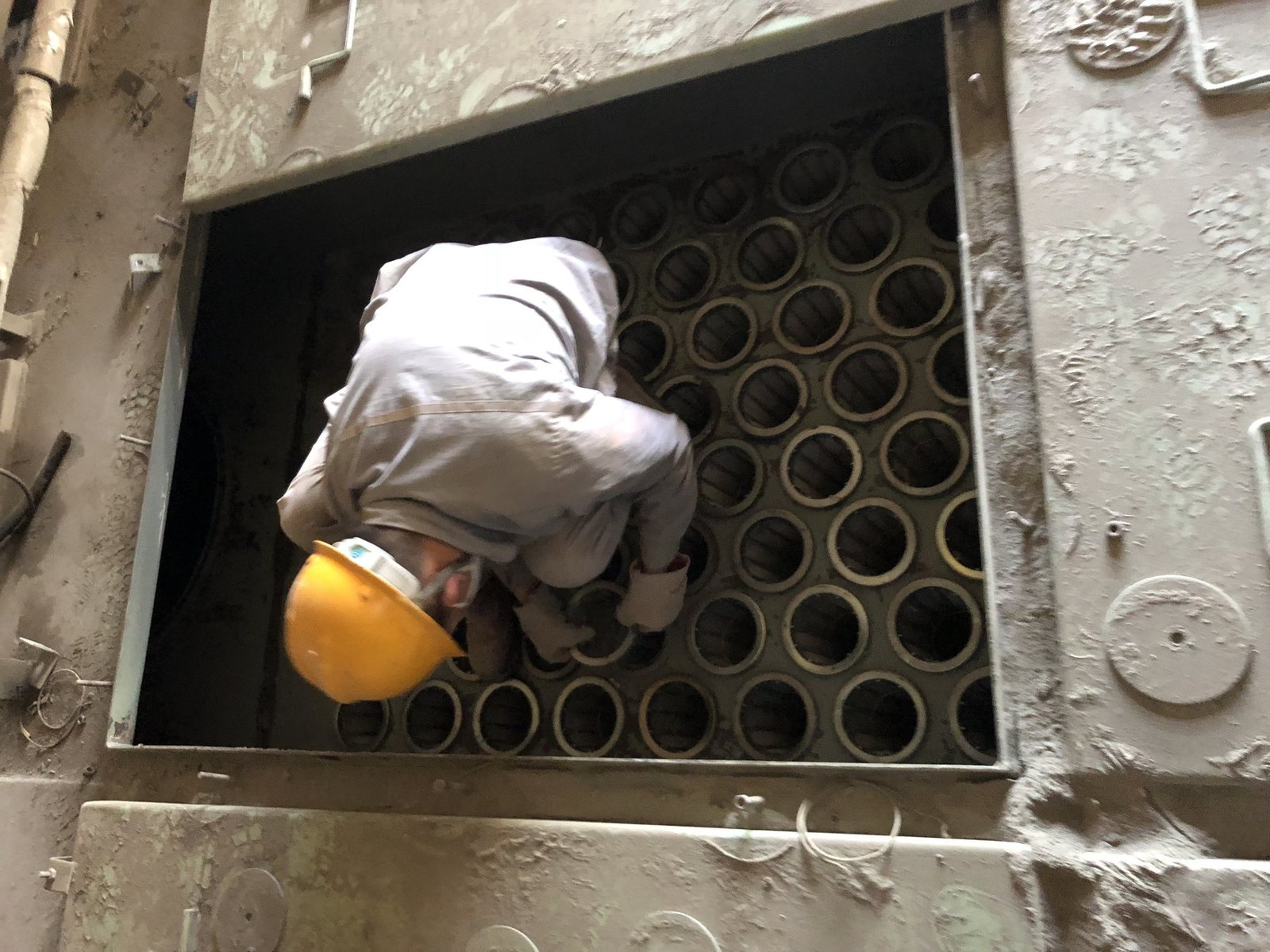
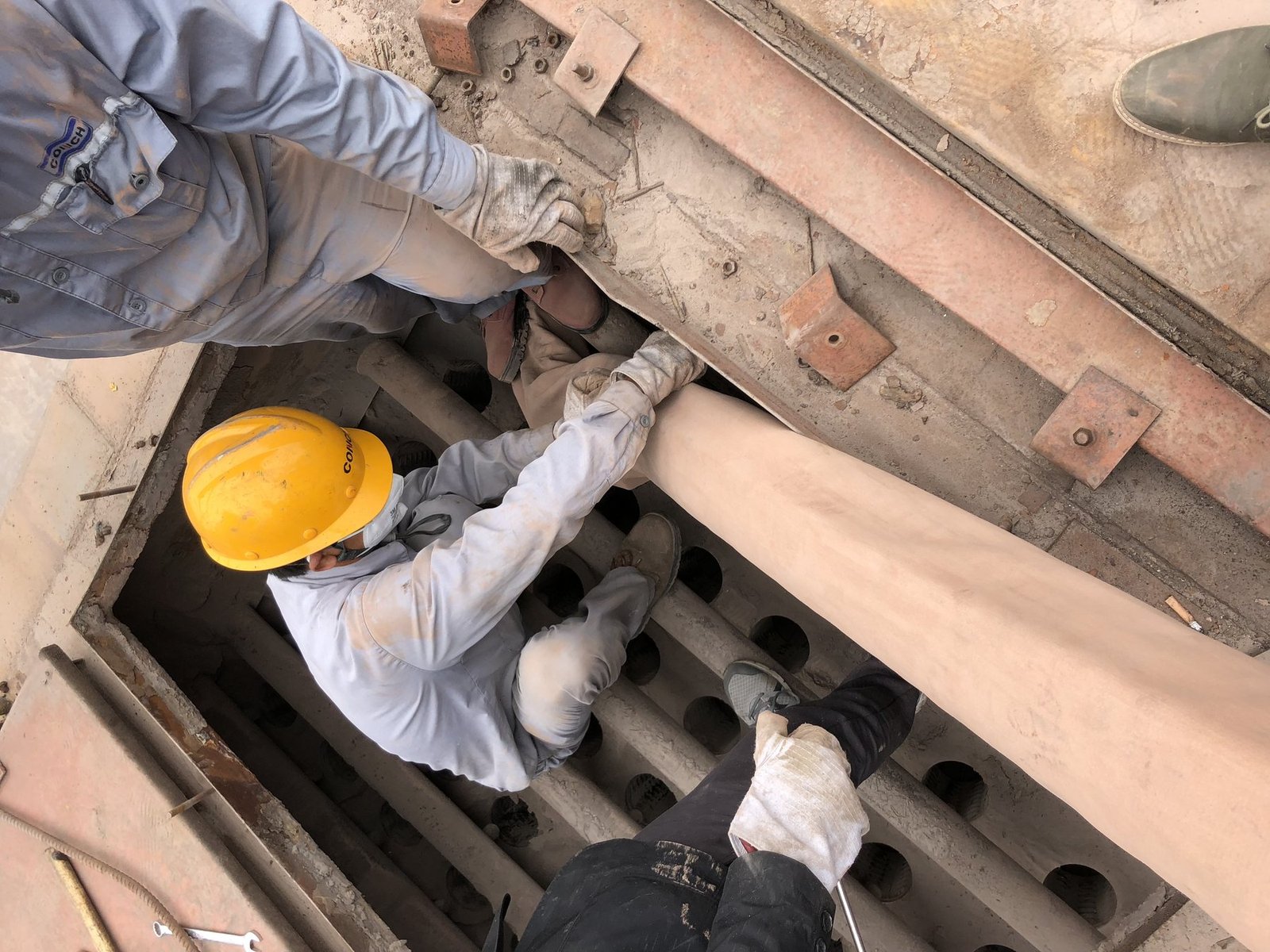
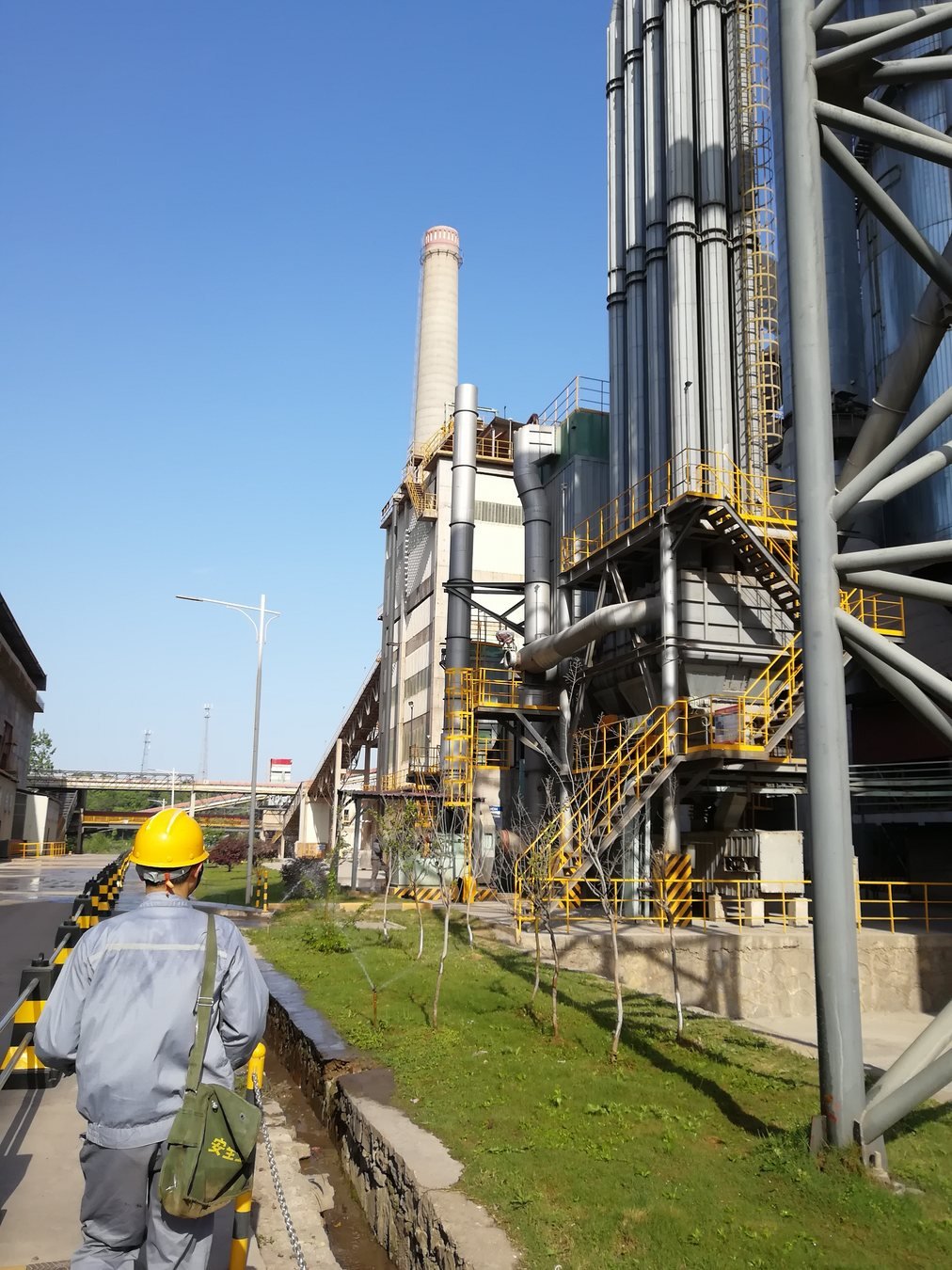
A replacement order is more reliable when the supplier can see the process context: collector access, tube-sheet layout, cage condition, old bag damage and the way the bag is installed.
These site images are included to show the practical information that can affect a cement baghouse review—not as a claim of a particular customer result.
- Check tube-sheet opening and bag-top fit before repeating an old size.
- Inspect cage surface, straightness and wear points where access permits.
- Use old-bag photos and failure location to guide the material and construction discussion.
Failure-led review
Do Not Order the Same Failure Pattern Again
Early failure often leaves a visible clue: hardened dust cake, chemical aging, brittle fabric, cage rub marks, bottom wear, seam damage or leakage near the top connection. A few clear photos can be more useful than a material name alone.
Before repeating an old specification, compare the damaged area, bag construction, cage condition and process events that occurred before the failure.
Documented technical references
Review Similar Cement Baghouse Problems Before Reordering
These anonymized references come from manufacturing-partner service records. They are provided for technical context and are not presented as Pinnacle Filter’s direct customer projects.
Moisture and Cleaning Control
Review how a cement-mill pressure-drop problem was investigated before changing the filter specification.
A Hidden Collector Defect
See why recurring damage at the same position led to inspection of an internal collector component.
Looking Beyond Filter Settings
Follow a documented investigation that examined duct leakage when filter adjustments did not resolve the emissions symptom.
Cement filter bag RFQ
Send the Process Details That Affect the Recommendation
A complete inquiry reduces back-and-forth and makes it easier to confirm media, finish, top/bottom construction and cage matching before production.
Useful information to send
- Collector location: kiln tail, cooler, coal mill, cement mill or another point
- Bag diameter, length, top style and bottom construction
- Quantity, delivery destination and target timing
- Continuous and peak temperature; dust, gas and moisture conditions
- Cleaning method, current pressure-drop behavior and any emission target
- Photos of current bags, cages, tube sheet and damaged areas where available
Buyer questions
Cement Plant Filter Bag FAQ
Which filter bag is best for a cement plant?
There is no single best material for every cement collector. Start with the exact collector location and review temperature, gas chemistry, dust behavior, cleaning method, fit and failure history.
Can the same bag be used for kiln tail and clinker cooler duty?
Not automatically. The two locations can have different temperature, dust loading and abrasion conditions, so the material and construction should be reviewed separately.
What should I provide for a replacement quotation?
Send dimensions, top and bottom construction, quantity, operating condition and photos of the current bag and cage. A nameplate photo can also help when available.
Why can new bags fail quickly after replacement?
Material choice is only one factor. Cage damage, rough welds, incorrect fit, unstable temperature, moisture, chemical exposure or cleaning problems can also shorten bag life.