
Technical Service Reference · Anonymized
Cement Mill Pressure Drop Recovery Through Moisture and Cleaning Control
A sharp pressure-drop increase was traced to dust caking under a wet, low-temperature operating condition—not to a filter-media defect.
At a cement mill’s main dust collector, pressure differential rose rapidly after a PTFE-membrane bag change. The site initially saw a bag problem; the inspection showed a system condition that could blind any compatible media.
Source and role: This technical-service reference is based on an anonymized record from the factory that manufactures filter bags supplied through Pinnacle Filter. Pinnacle Filter was not the original supplier to, or the on-site service provider for, the end user.
The operating problem
A fast rise in differential pressure, with visible dust cake
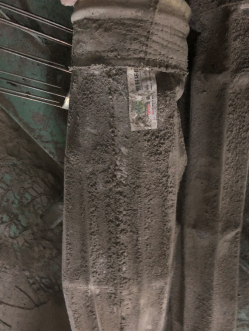
After roughly two months in service, the bag surfaces showed clear caking. The documented site condition combined elevated inlet moisture with lower gas temperature, making the dust soft but difficult to release under the existing cleaning programme.
Field evidence trail
The observations that changed the diagnosis
A rapid pressure rise
Differential pressure increased from 1,600 Pa to 2,500 Pa after roughly two months in service.
Why it mattered: The speed of the change required an operating-condition review, not only a material comparison.
Visible surface caking
Removed bags carried an obvious dust layer; the deposit was described as soft but difficult to release by pulsing.
Why it mattered: The physical condition matched blinding by retained, moisture-affected dust.
Wet, cooler inlet condition
The service record identified higher combined inlet moisture together with lower gas temperature.
Why it mattered: Those conditions increase the likelihood of cohesive dust and poor cake release.
Dark colour was not the failure mode
The blackened appearance was documented as cement-dust staining of the PTFE surface, without evidence that colour alone impaired use.
Why it mattered: Appearance was separated from the actual pressure-drop mechanism.
How the factory service team worked
Evidence first. Recommendation second.
Inspect the used media
Review the bag surface and the pressure trend instead of assuming a fabric defect.
Check the operating condition
Compare inlet moisture and temperature with the onset of the pressure rise.
Tune cleaning and verify
Shorten the cleaning interval from 8 to 6 seconds and verify that pulse components operated normally.
Diagnostic decision
What was ruled out—and what was confirmed
Findings that did not fit the initial assumption
- A pressure increase by itself did not establish a PTFE-membrane quality defect.
- The dark surface colour was not treated as proof of shrinkage or loss of filtration performance.
- Replacing bags without correcting moisture and cleaning conditions would leave the same blinding mechanism in place.
Confirmed direction
Moisture-affected dust cake plus cleaning timing—not a fabric rupture
The bag surface, operating condition and subsequent pressure recovery all pointed to dust-cake retention under a wet, cooler process condition. The service response therefore focused on cleaning frequency, pulse-system function and inlet moisture control.
Observed result
The collector returned to its previous pressure level
The service record reports that, after the cleaning and process adjustments, differential pressure returned to the previous 1,600 Pa level.
Comparable field references
How similar caking appears in other cement-baghouse inspections
These photographs come from separate anonymized service records in the same field-service deck. They illustrate comparable surface caking and hard, plate-like deposits; they are not presented as evidence for this case’s 2,500-to-1,600 Pa result.
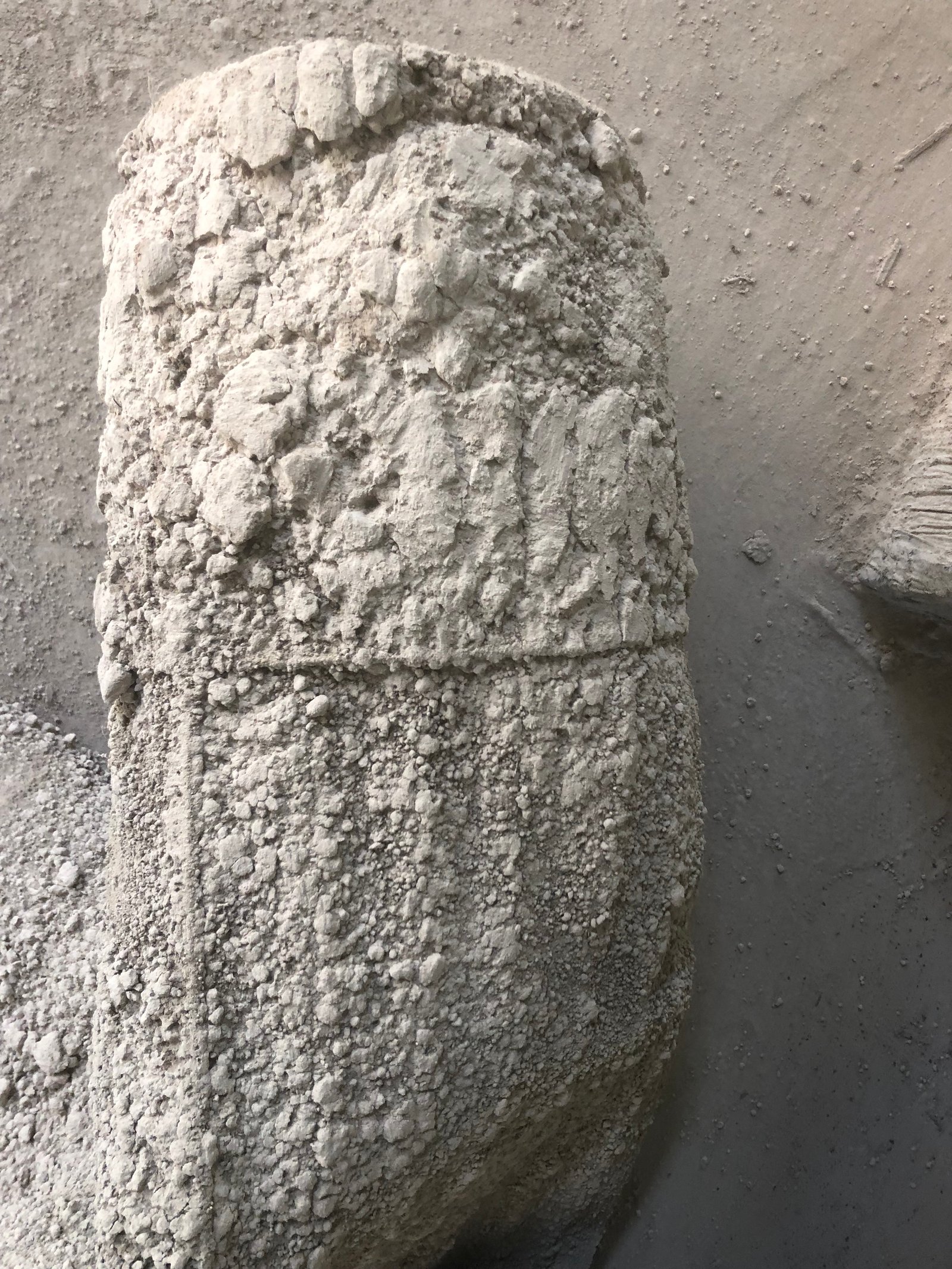
Severe hardened dust cake on a removed P84 bag from a separate kiln-tail service record.
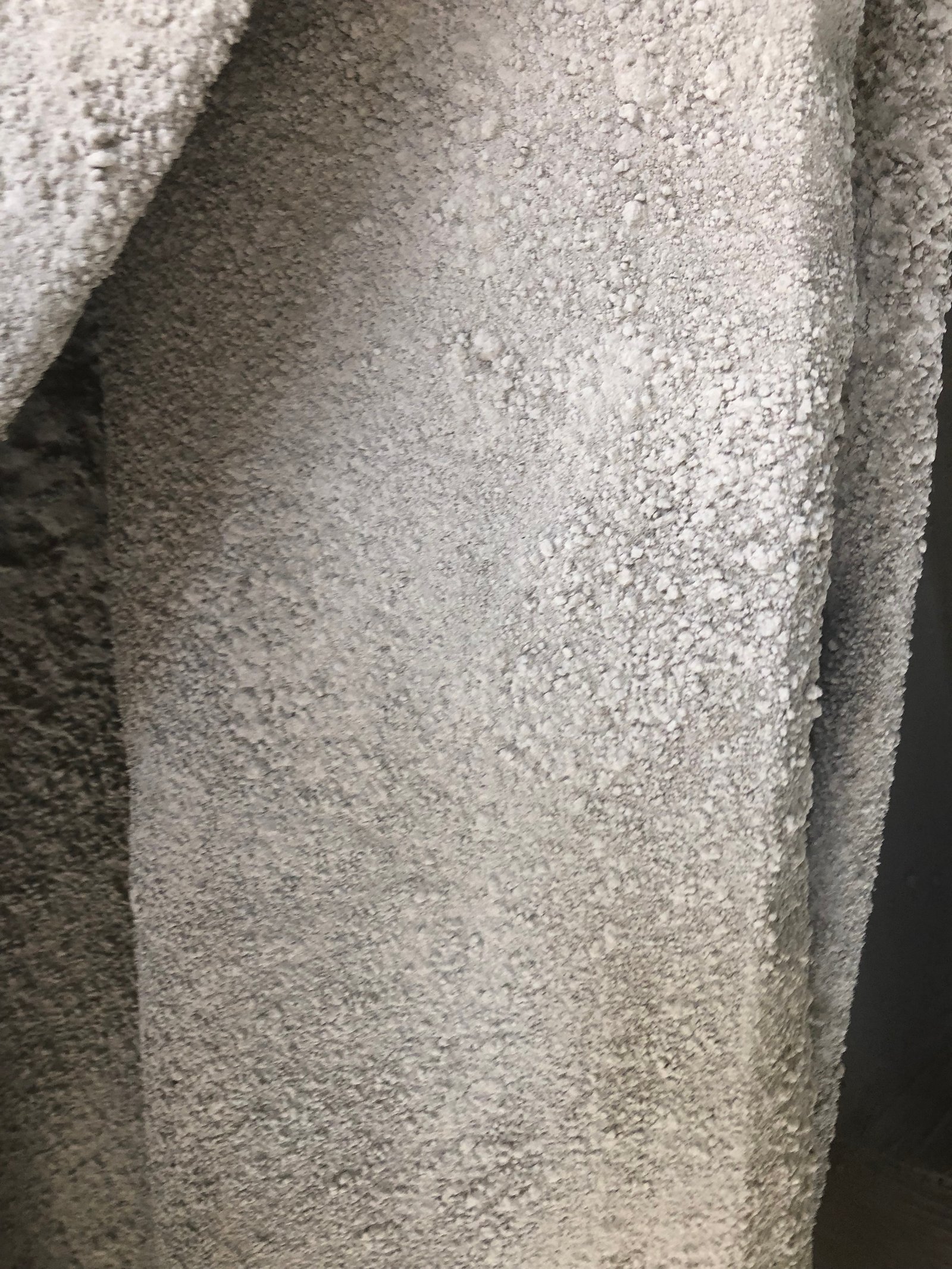
Close field view of a hard, plate-like deposit associated with poor cake release in a comparable collector.
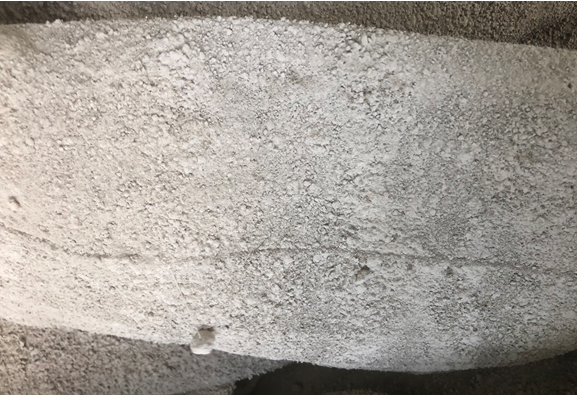
Dense surface caking recorded on a cleaned bag during another cement-baghouse inspection.
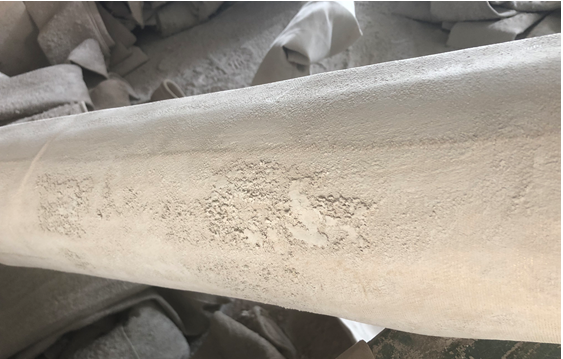
Earlier-stage surface caking on a replacement bag from the same comparison record.
Corrective direction
Actions tied directly to the evidence
Shorten the cleaning interval
Change the documented pulse interval from 8 seconds to 6 seconds and observe the pressure response.
Verify every pulse component
Check that valves, pulse delivery and the cleaning sequence operate consistently across the collector.
Control the inlet condition
Reduce excessive combined moisture and avoid operating conditions that promote cohesive dust on the membrane surface.
Trend pressure after each change
Use the return toward the prior 1,600 Pa level as verification rather than relying on bag appearance alone.
Next shutdown checklist
- Photograph the dust cake before disturbing the bag surface.
- Record differential pressure against production state and time.
- Compare inlet temperature with the wettest operating periods.
- Check pulse-valve response and sequence consistency.
- Test whether the dust cake releases by hand and by pulsing.
- Separate harmless surface staining from actual media damage.
Transferable lesson
Blinding is a system diagnosis before it is a material decision.
When a membrane bag loads quickly, inspect moisture, temperature, dust release and cleaning performance before changing material. A well-matched bag cannot compensate for a sustained wet operating condition or an ineffective cleaning programme.
Source and confidentiality: The original manufacturing partner’s technical-service record supports the operating conditions and findings. Customer names, sites, dates and identifying images have been removed; only relevant operating conditions, observations and confirmed findings are retained. This is not presented as a Pinnacle Filter direct customer project.
Need a second set of eyes on your baghouse?
Send filter-bag photos, cage details, pressure trend and the operating condition. Pinnacle Filter can help structure the review before a replacement order.