Cement Kiln Baghouse Filter Bags: Managing Alkali, Sulfur and Dew-Point Corrosion
Cement kiln baghouse filter bags face abrasive mineral dust, changing gas chemistry and disruptive start-up or mill-trip cycles. When bags become brittle, lose strength or develop a hard sticky cake, first distinguish alkali-bearing deposits, acid-dew-point condensation, oxidation, heat and abrasion. That evidence is needed before specifying another material or finish.
This guide explains how to turn those conditions into a defensible filter-bag specification. It is written for kiln maintenance teams, operations managers and technical buyers reviewing replacement bags for cement-process dust collection.
Why cement kiln baghouse filter bags face chemical stress
Cement raw materials and fuels can introduce potassium, sodium, sulfur and chlorine into the kiln system. In the hotter zones, alkali salts and chlorides can volatilize; as the gas cools, they can condense or collect in the dust cake. Sulfur species add another variable. The most damaging condition is often not dry SO2 or SO3 alone, but a temperature excursion that allows water and acid-forming species to create a wet, concentrated deposit on or inside the media.
That is why a baghouse that runs acceptably at normal load may fail during raw-mill stops, cold starts, fuel changes, bypass operation or other periods when temperature and moisture move quickly. A nominal gas temperature is useful, but the minimum temperature, duration below the relevant dew point and frequency of those excursions are usually more informative.
Two Failure Paths to Separate Before Selecting Media
1. Alkali-bearing deposits and glass-fibre vulnerability
Fiberglass is valued in hot-gas filtration for dimensional stability. Its silica-based fibre structure, however, can be vulnerable when alkaline salts become wet and concentrated. Under those conditions, the fibre surface may be chemically attacked and then weakened further by pulse cleaning, flexing and cage contact. The visible result can be embrittlement, loss of tensile strength or breaks at high-flex locations.
Do not assume that every deposit containing potassium or sodium produces the same reaction. The severity depends on the salt composition, moisture film, temperature, deposit concentration and time of contact. A laboratory dust analysis and photos of the failed media are more useful than assigning a failure to a single simplified chemical equation.
2. Acid dew point, liquid water and sulfate deposits
SO3, water vapour and temperature together determine the risk of sulfuric-acid condensation. The acid dew point is not a fixed number: it changes with SO3, moisture, pressure and other gas constituents. When the baghouse or a local cold surface drops below that condition, acid condensate and dissolved salts can penetrate a conventional depth-filtering felt, create a hard cake and accelerate chemical or mechanical damage.
The corrective action is therefore not only “choose an acid-resistant bag.” Review the low-temperature events, insulation and air leakage, moisture sources, mill-operation sequence and cleaning performance. Preventing repeated condensation is usually the highest-value part of the solution.
What to Record Before You Request a Replacement-Bag Recommendation
- Normal, peak and minimum inlet temperature; include start-up, shutdown and raw-mill-trip trends rather than a single design figure.
- Moisture, O2, SO2/SO3, HCl/Cl− indicators and any available fuel or raw-meal chemistry.
- Dust analysis for soluble alkalis, chlorides and sulfates, plus dust stickiness and abrasiveness.
- Collector type, air-to-cloth ratio, cleaning method, pulse pressure/frequency and differential-pressure trend.
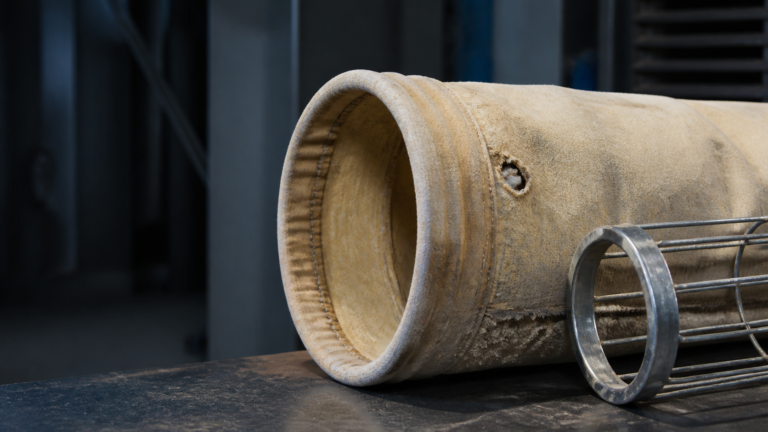
- Photos of representative failed bags inside and outside, plus the matching cage, tube sheet and any hard deposits.
These records let a supplier distinguish a chemical limitation from cage abrasion, poor fit or an operating upset. They also prevent a material upgrade from being used to mask a correctable process problem.
Media Directions for Alkali–Sulfur Conditions
| Media direction | Where it can be useful | Conditions that still need checking |
|---|---|---|
| Acid-treated or PTFE-protected fiberglass | High-temperature service where fiberglass dimensional stability is required and chemical protection is matched to the duty. | Wet alkaline deposits, flex fatigue, cage condition, seam protection, finish integrity and temperature cycling. |
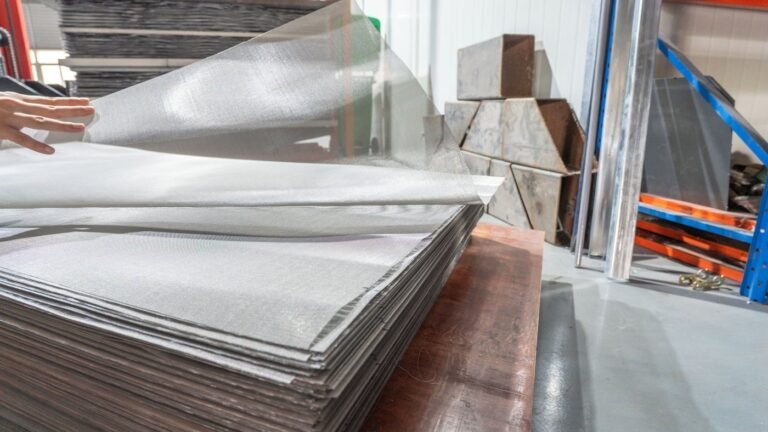
| Fiberglass/FMS composite with an ePTFE membrane | Hot pulse-jet applications where surface filtration, dust release and reduced particle penetration are important. | The membrane improves surface filtration; it does not eliminate exposure at seams, edges, damaged areas or during persistent liquid condensation. |
| 100% PTFE felt or PTFE-based media | Severe acid/alkali chemical exposure or difficult dust release, within the finished bag’s verified temperature and mechanical limits. | Cost, mechanical support, construction details, peak temperature and whether the collector can maintain dry operating conditions. |
| PPS felt | Some acid-gas and moisture duties at moderate temperature because of strong acid and alkali resistance. | PPS can be limited by oxidising conditions, O2/NOx exposure and high-temperature excursions; it is not automatically suitable for hot kiln-tail gas. |
| P84/polyimide or a purpose-designed blend | High-temperature fine-dust filtration where its fibre geometry and cake-release behaviour are beneficial. | Check moisture/hydrolysis exposure and concentrated alkali conditions. A blend ratio or claimed service life should be selected from the actual duty, not copied from a generic table. |
When an ePTFE Membrane Adds Real Value
An ePTFE membrane can move filtration toward the media surface. In a correctly designed pulse-jet collector, this can improve initial capture, help dust release and reduce the amount of fine material driven deep into the felt. For kiln dust that tends to form a tenacious cake, these benefits can support a steadier pressure drop and simplify cleaning.
The limitation is equally important: a membrane is not a cure for sustained condensation, gas leaks, an undersized collector or an aggressive pulse system. If the dust cake is wet, strongly soluble or cemented by a process upset, first correct the gas and operating condition. Then evaluate whether a membrane construction is the right next layer of protection.
Three Practical Reliability Upgrades
- Use the temperature history to control dew-point events. Trend the coldest gas periods, raw-mill transitions and start-up/shutdown sequence. Inspect insulation, false-air entry and moisture sources whenever hard cake or corrosion appears.
- Specify the finished bag as an assembly. For chemically demanding service, require the complete media construction and relevant seam, thread, cuff, reinforcement and membrane details. Compare them with the cage, tube sheet and cleaning method.
- Inspect cages before installing a premium bag. Rust scale, burrs, distorted cages and poor bag-to-cage fit can rapidly damage a chemically upgraded medium. Replace or correct the cage where it is part of the observed failure pattern.
A Field Checklist for the Next Kiln Outage
- Map the failure: bag row, height, side and direction of damage.
- Compare several bags. Repeating damage in one location commonly points to a mechanical or flow-distribution issue.
- Keep samples of the dust cake for soluble-salt and moisture review where appropriate.
- Check bag flexibility, seam condition, surface finish and cage-contact areas—not only visible holes.
- Review differential pressure alongside temperature and cleaning-air history.
- Ask for a recommendation that states the assumptions: gas chemistry, temperature range, moisture risk, media construction and expected operating window.
Frequently Asked Questions
Is standard fiberglass always the wrong choice for a cement kiln baghouse?
No. Fiberglass remains appropriate in many high-temperature duties. The question is whether the actual dust and gas conditions, finishing and construction provide enough protection against wet alkaline deposits, acid condensation and mechanical flexing in that collector.
Can a PTFE membrane stop acid-dew-point damage?
It can improve surface filtration and dust release, but it cannot replace dew-point control. Persistent liquid condensation can still damage the overall bag construction and create collector-wide operating problems.
Should P84 replace fiberglass whenever temperature is high?
Not automatically. P84 can be valuable for particular high-temperature fine-dust duties, but it must be evaluated against alkali exposure, moisture/hydrolysis risk, temperature profile and the desired media construction. There is no universal “best” fibre for kiln service.
Need a Cement-Kiln Baghouse Media Review?
Send the current bag construction, dimensions, failure photos, cage details, gas/temperature history, dust information and cleaning data. Pinnacle Filter can help turn the evidence into a practical filter-bag and cage recommendation for your next outage.
Next step
Check the baghouse before changing bags
Cage fit, cleaning method, tube-sheet condition or repeated damage may affect the replacement result. Review the baghouse system first.