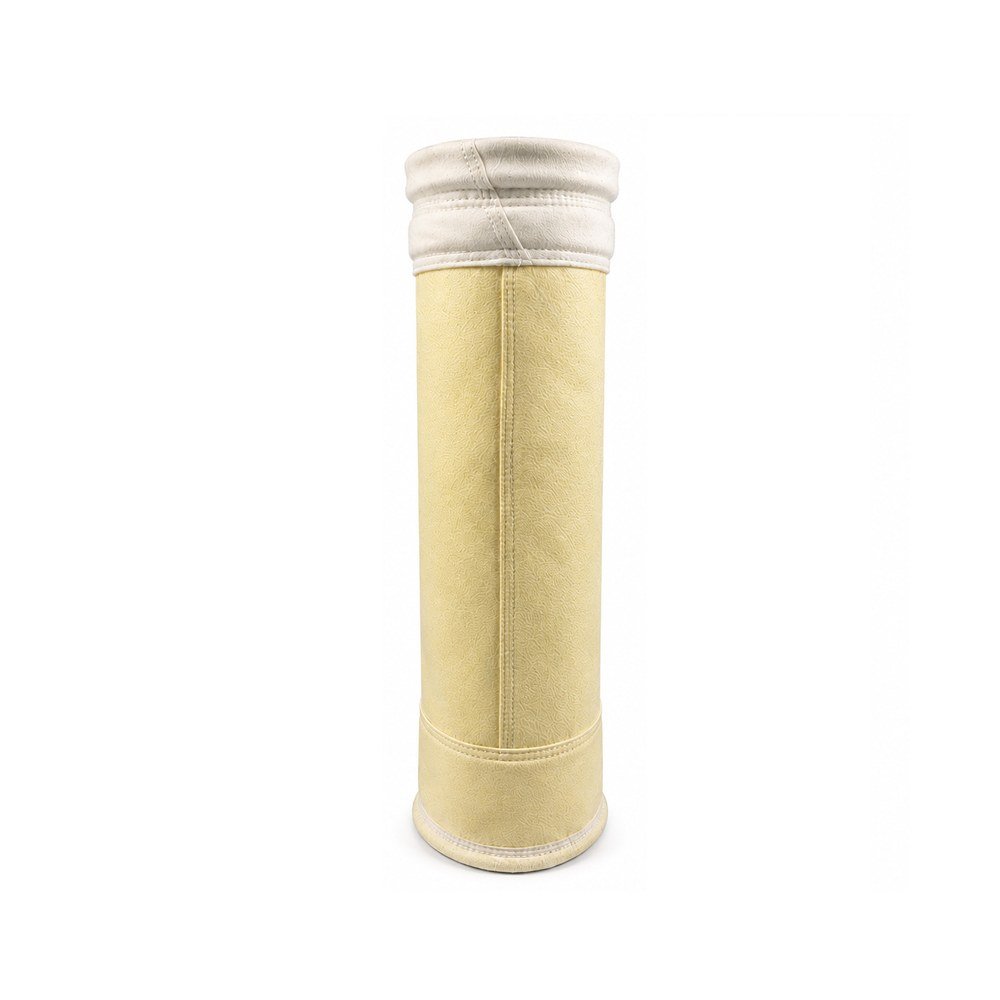
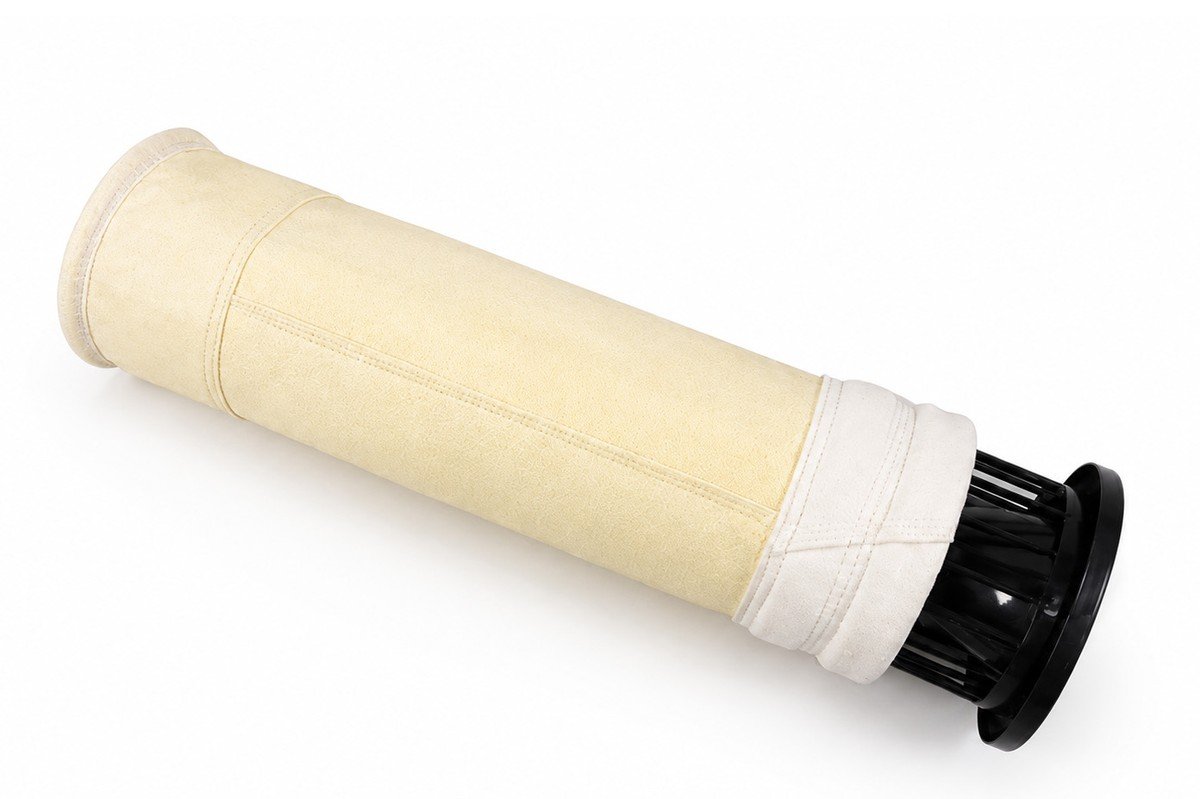
Acrylic Filter Bag
Acrylic filter bags are selected for moderate-temperature dust collectors where moisture resistance is more important than standard polyester performance.
- Common use: humid gas, hydrolysis concern and moderate-temperature dust collection
- Custom construction: top style, bottom design, surface finish and size can be matched to the collector
- Quote basis: temperature, humidity, dust type, bag size, cage condition and service-life target
Description
Moisture-tolerant moderate temperature media
Acrylic Filter Bags for Moisture-Aware Moderate Temperature Dust
Acrylic is selected when polyester is too weak against moisture or hydrolysis risk, but the plant does not need a premium high-temperature media.
PRODUCTION AND QUALITY CONTROL
How Pinnacle Controls Custom Acrylic Filter Bag Orders
For custom Acrylic Filter Bag orders, Pinnacle Filter checks more than the material name. The finished bag must match the dust collector size, cage condition, top construction, temperature and dust behavior. The following production and inspection points help buyers review acrylic needle felt before shipment.
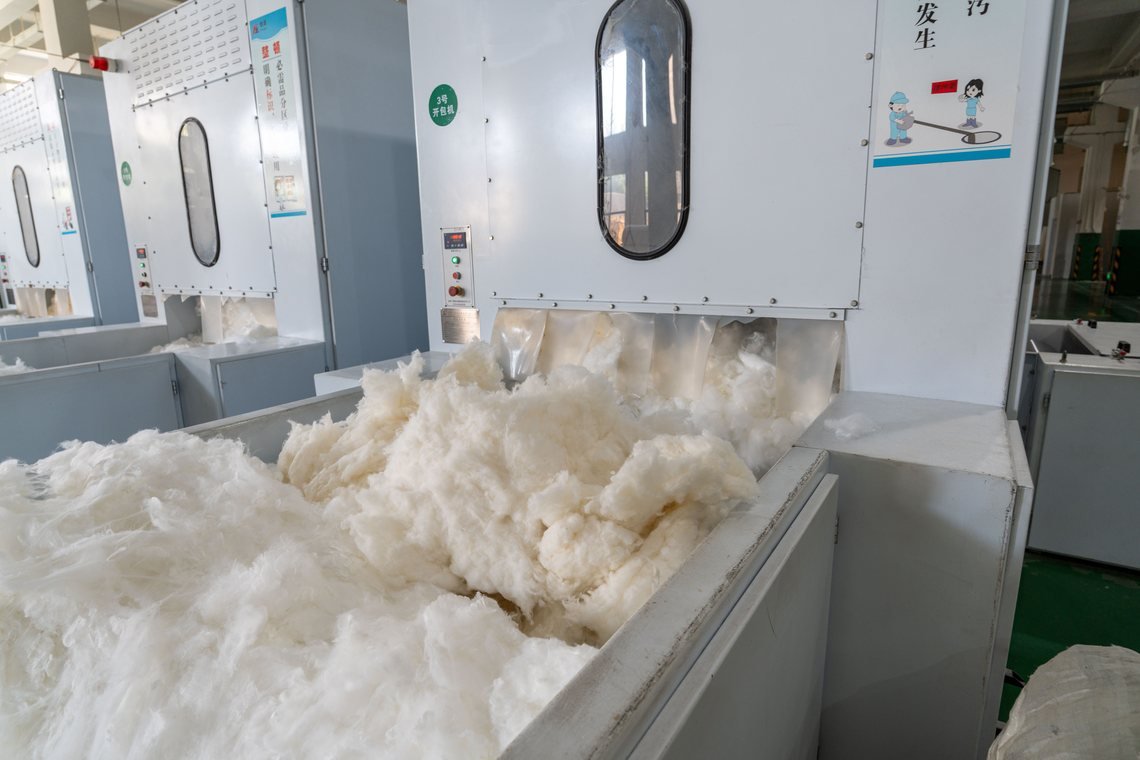
Media preparation
Acrylic fibers are opened, blended and formed into needle felt before cutting. Weight, thickness, permeability and surface finish are checked against moisture, acid exposure and the required resistance to hydrolysis.
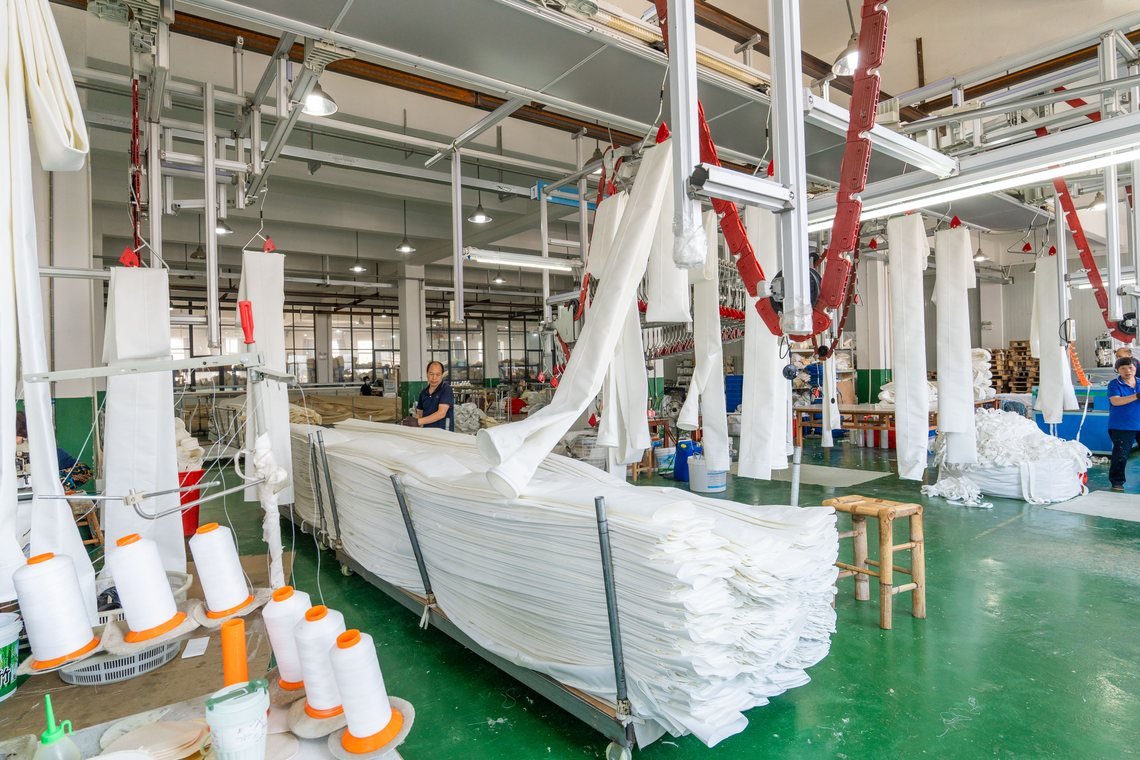
Bag sewing workshop
Bag diameter, length, cuff, bottom construction, thread and seam direction are controlled during sewing. Accurate dimensions support sealing while avoiding unnecessary tension on the felt.
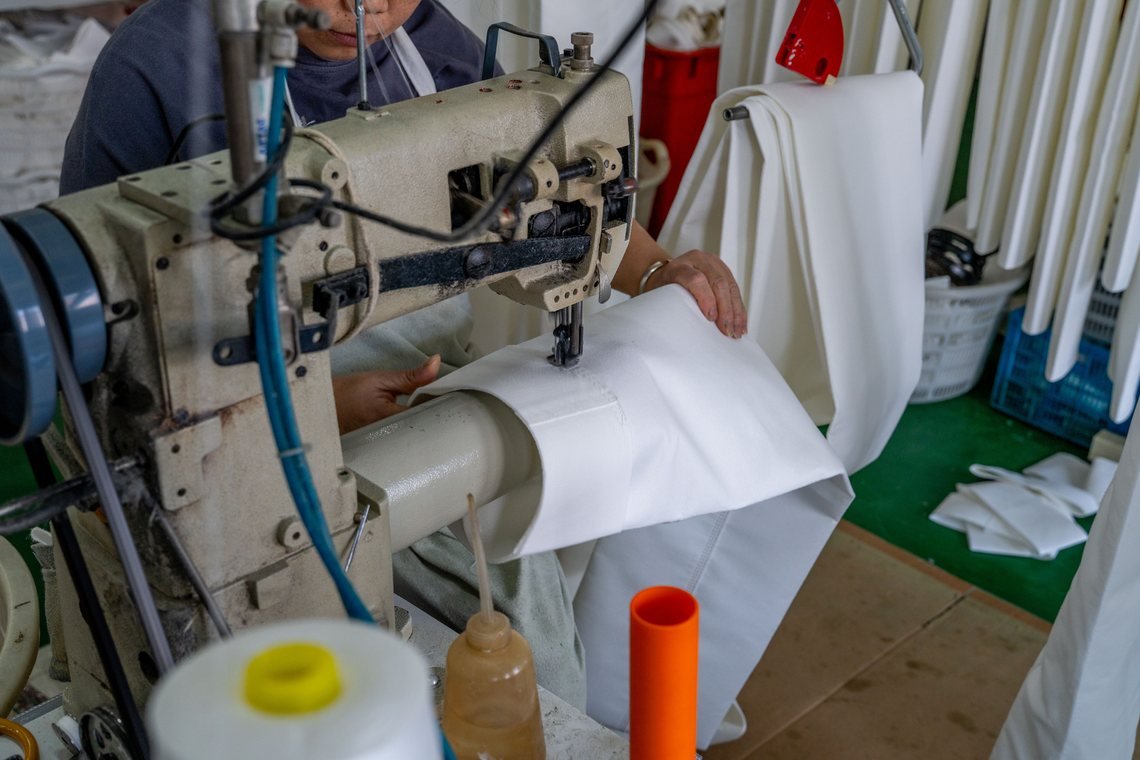
Seam and construction detail
Stitch consistency and reinforcement at the cuff and bottom are inspected for cleaning loads and long-term fit. The seam construction should remain secure under the expected wet-gas conditions.
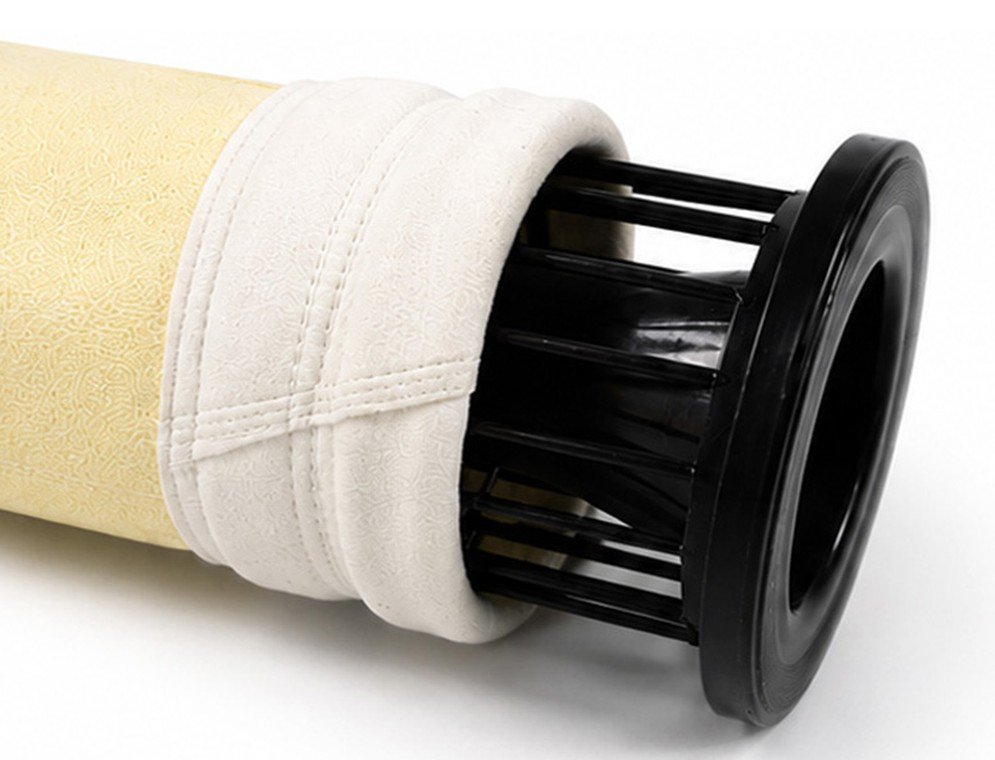
Cuff and cage fit review
The cuff construction, reinforcement stitching and cage interface are reviewed before packing. A stable cuff helps the acrylic bag seal correctly on the tube sheet while avoiding excess tension, rubbing or loose fit during pulse cleaning.
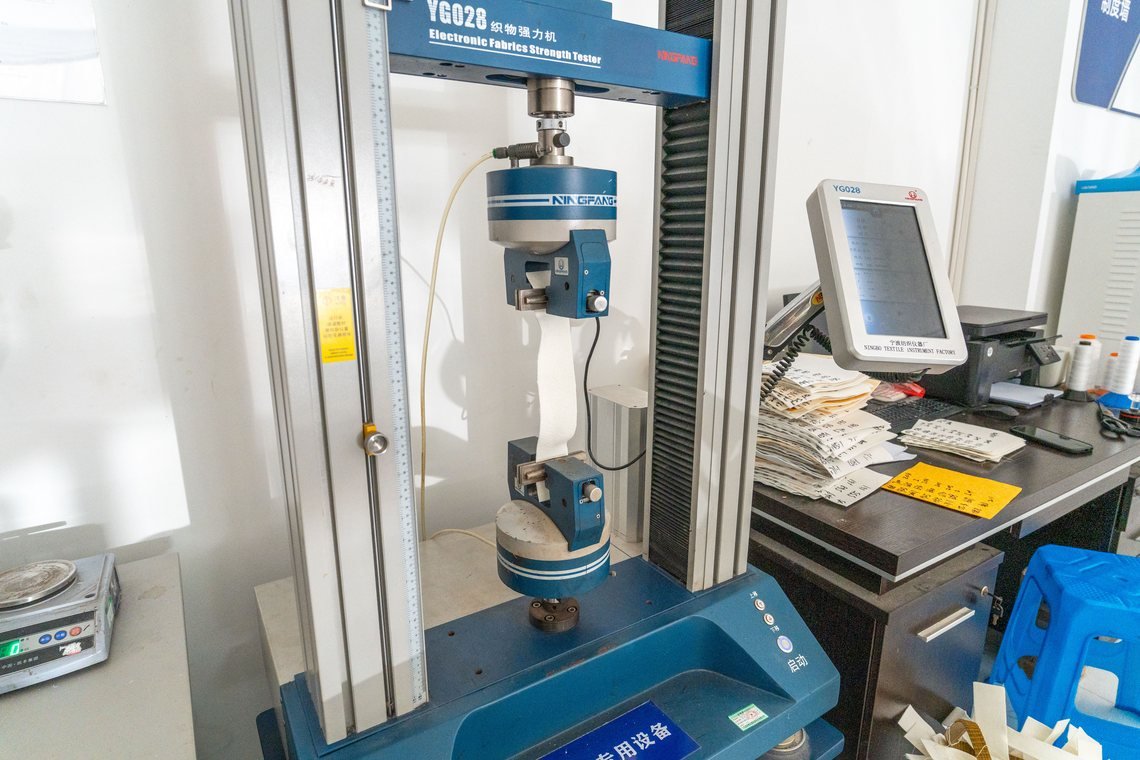
Material testing
Typical checks include weight, thickness, tensile strength and air permeability. Material grade and finishing direction are verified because moisture and gas chemistry are central to acrylic media selection.
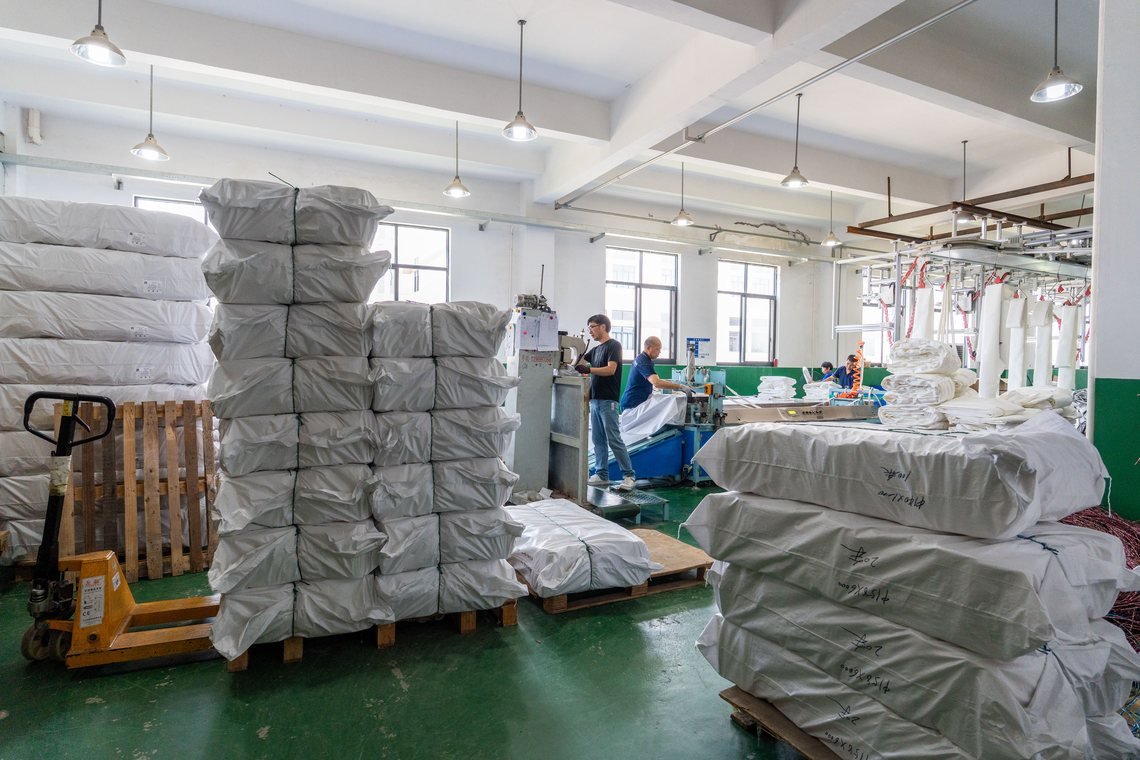
Packing and delivery
Bags are identified by size and quantity and protected from contamination and deformation. Dry packing helps the finished construction arrive ready for installation in moisture-related applications.
Before choosing acrylic
Acrylic Selection Window
| Condition | What it means |
|---|---|
| Dry, normal dust | Polyester may still be more economical. |
| Moist or hydrolysis concern | Acrylic becomes a stronger candidate. |
| High heat or acid gas | Check PPS, aramid, PTFE, FMS or fiberglass before ordering. |
| Bag failure history | Photos can show whether the issue is media, sewing, cage friction or condensation. |
Moderate-duty filtration
Typical Acrylic Applications
Moisture-sensitive dust
Systems where ordinary polyester may age too quickly.
Cement and mineral handling
Moderate temperature lines with controlled gas chemistry.
Powder processing
Useful when dust is not highly corrosive but humidity is present.
Custom replacements
Made from old samples, drawings or collector dimensions.
Buyer checklist
What Pinnacle Confirms Before Quoting
Acrylic is a middle option, so the boundary conditions matter.
Neighboring Materials
If acrylic is borderline, compare polyester for cost or PPS for stronger hydrolysis and acid resistance.
Technical selection guide
Acrylic Filter Bag Specifications, Applications and Selection Notes
Acrylic filter bags sit between economical polyester and more resistant media such as PPS. They are useful when moisture or hydrolysis risk makes ordinary polyester uncomfortable, but the process does not justify a premium high-temperature or severe chemical-resistance media.
| Typical temperature direction | Moderate-temperature filtration; confirm actual operating and peak temperature. |
|---|---|
| Dust condition | Moderate dust streams with moisture concern but limited severe chemical attack. |
| Available constructions | Custom diameter, length, top style, bottom reinforcement and seam construction. |
| Common finishes | Heat setting, singeing, calendaring, water/oil repellent and custom surface treatment. |
Where This Acrylic Filter Bag Is Commonly Used
Moisture-aware dust collection
Where polyester service life is shortened by humidity.
Minerals and cement handling
Moderate-temperature lines with controlled gas chemistry.
Powder processing
When moisture is present but corrosion is not severe.
Replacement projects
Useful when old polyester bags show hydrolysis or moisture aging.
Operating Boundaries to Check
- Severe acid gas: Review PPS or PTFE instead.
- High-temperature operation: Review aramid, FMS, fiberglass or P84.
- Combustible dust: Anti-static construction should be reviewed separately.
- Sticky dust: Surface finish or membrane options may be required.
Common Failure Causes
- Fabric weakening: Moisture, heat or chemical attack may be stronger than expected.
- High pressure drop: Dust cake release and cleaning condition should be checked.
- Top leakage: Snap band, tube sheet and installation may not match.
- Abrasion marks: Check cage roughness and inlet airflow direction.
Selection Advice from Pinnacle Filter
Acrylic is often a good discussion point when buyers say polyester is not lasting long, but the system is not severe enough for PTFE. Pinnacle should confirm moisture, dew point, temperature and dust behavior before quoting acrylic bags.
Related product pages and next steps
Pinnacle Filter Support
Ask Whether Acrylic Fits Your Working Condition
Send temperature, humidity, dust type, bag size and current problem. Pinnacle will help confirm whether acrylic is a suitable direction.
Fast RFQ checklist
Technical Reference
Typical Acrylic Filter Bag Specification
Use this table as a reference for initial material review. Final weight, thickness, finishing, top construction and bag size can be customized according to the dust collector design and operating conditions.
| Item | Typical Value |
|---|---|
| Fiber material | Acrylic |
| Scrim material | Acrylic staple yarn |
| Thickness | 2.1 mm |
| Weight | 500-550 g/m2 |
| Air permeability | 120 L/(dm2*min) |
| Tensile strength | Warp >=600 N; weft >=1300 N |
| Break elongation | Warp <30%; weft <30% |
| Working temperature | Continuous 140°C; peak 160°C |
| Finishing options | Heat setting, calendering, singeing, PTFE coating, water and oil repellent, PTFE membrane |
Buyer Questions
FAQ
Is acrylic better than polyester?
Only in the right condition. Acrylic is often considered when moisture resistance is more important than lowest cost.
Is acrylic suitable for high temperature?
No. High-temperature systems should review aramid, PPS, P84, FMS or fiberglass.
Can acrylic bags be customized?
Yes. Size, top design, bottom reinforcement and finish can be matched to the dust collector.
Related Technical Guides
Helpful Reading Before Selecting Filter Bags